 info@bamchocolate.com
  Login
Login 

 en
en 
 BAM Cake converter
  Login
Login Claudia
Avtorica vsebin


 Reading time:
10 minutes
Reading time:
10 minutes 
Discover why use protein baking mixes for your home baking! Enjoy higher protein content, better texture, and reliable results every time.
TL;DR:
- Protein baking mixes are premixed blends designed to boost protein content in baked goods while maintaining texture and flavor, providing consistency and convenience. They standardize hydration, leavening, and flavor balance, avoiding common issues such as dense crumb or flat rise associated with DIY protein additions. These mixes support satiety, macro control, and use complete proteins like whey and egg to enhance both nutritional value and baking performance.
Protein baking mixes are premixed blends of protein ingredients and baking agents, formulated to boost the protein content of baked goods while preserving texture and flavour. The reason to use protein baking mixes is straightforward: they deliver higher satiety, better macro control, and consistent results that are nearly impossible to replicate by simply tipping protein powder into a standard recipe. Brands like Puratos and NōA have demonstrated that protein ranks high as a consumer priority, with shoppers expecting both nutrition and indulgence from their baked goods. For home bakers, these mixes remove the guesswork and replace it with reliable, protein-packed results every time.
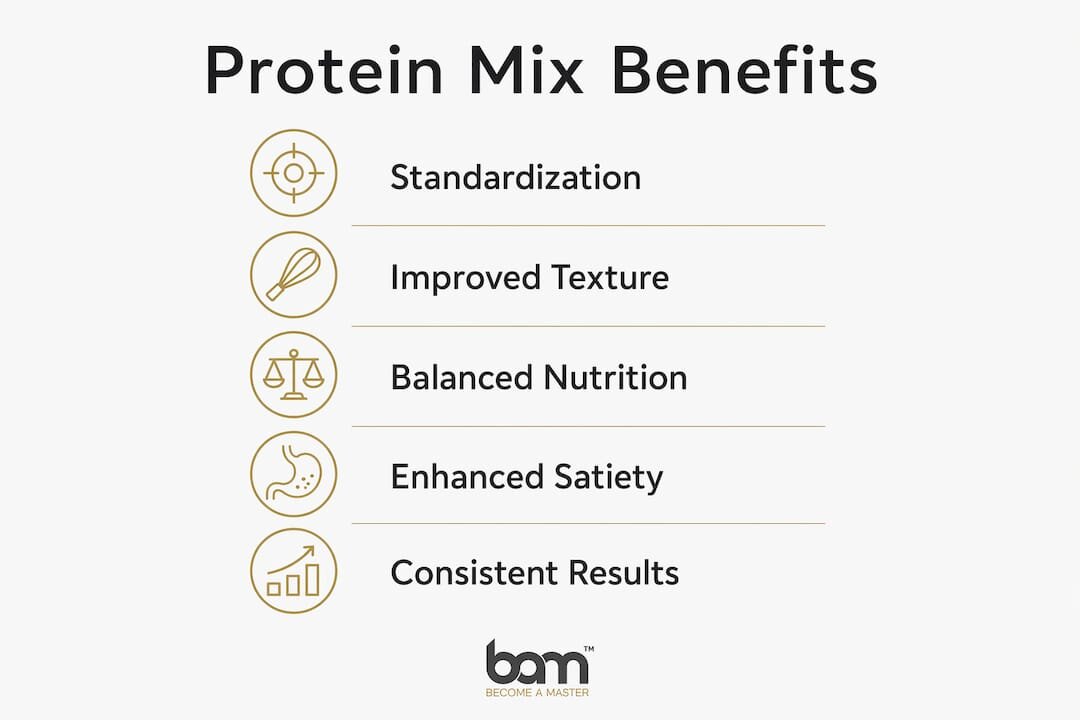
The single biggest advantage of a ready protein baking mix over a DIY approach is standardisation. Ready mixes blend protein with starches, leavening agents, and flavour-balancing components in ratios that have already been tested for performance. You get a consistent crumb, reliable rise, and predictable flavour without running a series of failed experiments first.
Adding raw protein powder to an existing recipe is not a simple swap. Protein enrichment tightens crumb and reduces volume unless hydration, mixing, proofing, and baking are all adjusted in response. Most home bakers do not account for these variables, which is why DIY protein additions so often produce dense, rubbery loaves or flat muffins.
The protein baking mix advantages extend to time and confidence. When the formulation is already balanced, you can focus on technique rather than troubleshooting chemistry. The benefits of protein baking mixes in this context are practical as much as nutritional.
Key reasons to choose a ready protein mix over manual additions:
Pro Tip: If you do add protein powder to your own recipe rather than using a ready mix, increase liquid by 15 to 20 per cent and add an extra half-teaspoon of baking powder per 30 grams of protein powder. This compensates for the water-binding and volume-reducing effects of the added protein.
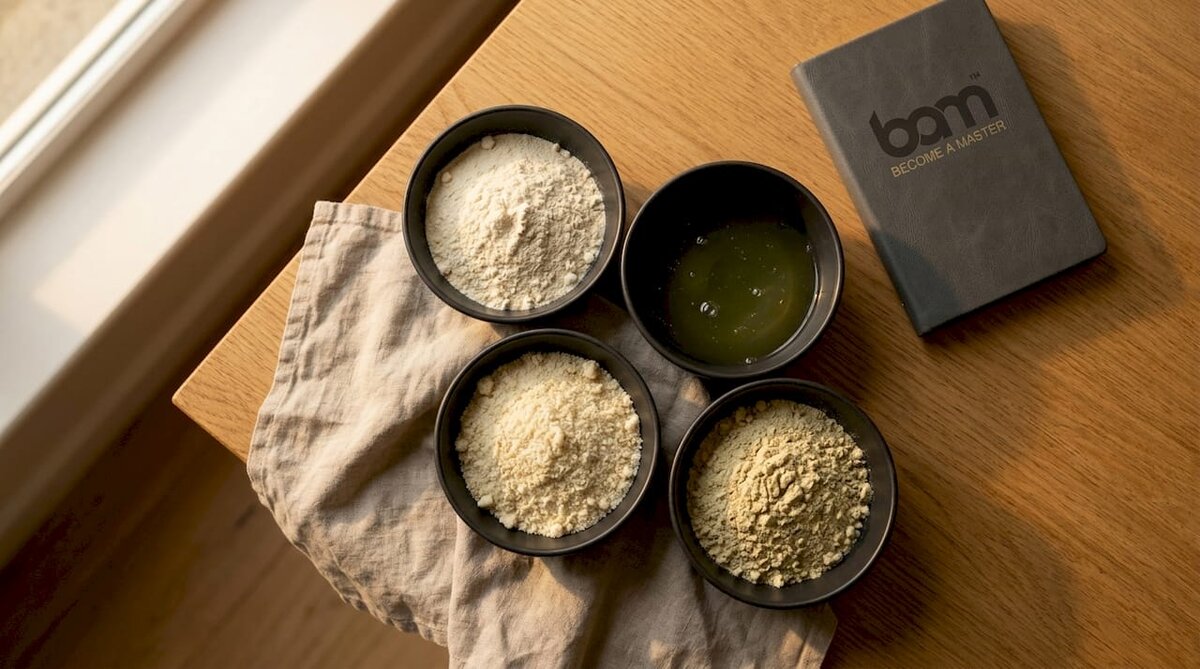
Not all protein sources behave the same way in the oven, and understanding the differences helps you choose the right mix for your goals. Whey proteins offer better branched-chain amino acids, a milder flavour, and produce a softer, more pliable dough. Milk protein concentrates and isolates, by contrast, bind significantly more water than whey, which means the dough behaves differently and requires adjusted liquid ratios even when the total protein amount is identical.
Egg protein is in a category of its own. Egg proteins cannot be simply replaced because their multifunctional properties influence volume, texture, and browning simultaneously. They aerate batters, bind structure, and contribute to the golden crust that makes baked goods visually appealing. No single alternative protein replicates all three functions at once.
Protein quality matters beyond the gram count on the label. Complete proteins, those containing all nine essential amino acids, support muscle repair and healthy ageing in ways that incomplete plant proteins cannot match without careful blending. This is why many commercial mixes combine dairy and plant proteins to cover both nutritional completeness and functional baking performance.
| Protein source | Amino acid profile | Baking function | Water-binding |
|---|---|---|---|
| Whey protein | High in BCAAs, complete | Soft dough, mild flavour | Lower |
| Milk protein concentrate | Complete, high in casein | Firmer dough, good structure | Higher |
| Egg protein | Complete, all essential AAs | Aeration, binding, browning | Moderate |
| Pea protein | Incomplete alone | Adds density, earthy flavour | Moderate to high |
| Soy protein | Complete plant protein | Emulsification, moisture retention | High |
Pro Tip: When reading a protein mix label, look for whey or milk protein listed as the first or second ingredient. Mixes that lead with pea or rice protein alone may require additional liquid and a binding agent like psyllium husk to achieve comparable texture.
Successful protein baking is not just about the mix you choose. How you handle the batter or dough determines whether the final product has a tender crumb or a dense, chewy texture that nobody wants to eat twice. Managing protein as a variable across all baking stages, rather than treating it as a passive ingredient, is what separates a good result from a disappointing one.
Follow these steps to get consistent results with protein baking mixes:
For leavening guidance specific to protein-enriched recipes, the baking powder and soda guide from Bamchocolate covers the adjustments worth making when your mix already contains a leavening agent.
The nutritional case for protein baking mixes goes beyond simply adding grams of protein to your diet. Protein intake provides satiety benefits through its amino acid composition, meaning a protein-enriched muffin keeps you fuller for longer than a standard carbohydrate-heavy one of the same calorie count. This is the core reason health-conscious bakers are switching to protein-packed baking options rather than treating baked goods as nutritional compromises.
Macro control is another practical advantage. When you bake with a mix that specifies protein content per serving, you can plan meals and snacks with accuracy. Products like NōA’s high-protein dessert mixes demonstrate what is achievable: around 30 grams of protein per serving with roughly 11.5 grams of protein per 100 calories. That kind of efficiency makes protein baking mixes a genuine tool for anyone managing fitness or weight goals, not just a marketing claim.
The nutritional benefits of protein baking mixes also include support for muscle repair and healthy ageing, particularly when the mix uses complete protein sources. Baked goods made with whey or egg protein deliver all nine essential amino acids in a format that is genuinely enjoyable to eat.
Protein baking mixes let you meet nutritional goals without treating food as medicine. The best ones taste as good as they perform, which is the only standard worth holding them to.
Key nutritional advantages to look for when choosing a protein mix:
Pro Tip: Check whether the protein listed on the label is measured by the dry mix weight or the prepared serving weight. These figures can differ significantly, and comparing mixes on a prepared-serving basis gives you a more accurate picture of what you are actually consuming.
Protein baking mixes outperform DIY protein powder additions because they standardise hydration, leavening, and flavour balance, delivering consistent nutrition and texture that home bakers cannot reliably achieve by modifying standard recipes.
| Point | Details |
|---|---|
| Ready mixes prevent common failures | Pre-balanced ratios eliminate tight crumb, flat rise, and chalky flavour from DIY protein additions. |
| Protein source determines baking behaviour | Whey produces softer dough; milk protein binds more water; egg protein adds aeration and browning. |
| Technique matters as much as the mix | Avoid overmixing, lower oven temperature slightly, and rest the batter before baking for best results. |
| Satiety and macro control are real benefits | Complete protein sources in mixes support fullness, muscle repair, and accurate nutritional tracking. |
| Label reading is non-negotiable | Check amino acid completeness, protein-to-calorie ratio, and whether figures are for dry or prepared weight. |
The first time I swapped a standard brownie mix for a protein-enriched one, I expected a compromise. What I got instead was a denser, more satisfying result that kept me away from the tin for longer than usual. That satiety effect is real, and it is the detail that most articles on healthy baking alternatives understate.
Where I have seen home bakers go wrong is in treating protein mixes as interchangeable with standard ones. They are not. The hydration adjustment is not optional. Skipping it produces a dry, crumbly texture that puts people off protein baking entirely, which is a shame because the fix is simple. Add a little more liquid, rest the batter, and the result is genuinely good.
My honest observation after working through a range of mixes is that the protein source matters more than the protein quantity. A mix with 20 grams of complete whey protein per serving outperforms one with 30 grams of incomplete pea protein in both texture and nutritional value. The gram count on the front of the packet is not the whole story.
The other thing worth saying is that protein baking does not require you to abandon indulgence. Pairing a protein mix with quality chocolate, as you would with Bamchocolate’s range, produces results that are both nutritionally sound and genuinely worth eating. That balance is achievable. It just requires choosing the right ingredients from the start.
— Andraz
Bamchocolate stocks a curated range of baking additives and accessories suited to protein-enriched baking, from leavening agents to specialist mix ingredients. If you want a ready starting point, the BAM chocolate soufflé mix offers a structured recipe format that pairs well with protein additions. For broader inspiration, the 101 BAM pastry recipe book covers techniques and ingredient combinations that translate directly to protein-enriched baking. All products are selected for quality and ease of use, making them a practical choice for home bakers who want reliable results without sourcing ingredients from multiple suppliers.
A protein baking mix is a premixed blend of protein ingredients, flour or flour alternatives, leavening agents, and flavour components, formulated to increase the protein content of baked goods while maintaining texture and taste.
Ready protein mixes standardise ingredient ratios including hydration and leavening, which prevents the tight crumb and reduced volume that occur when raw protein powder is added to an unmodified recipe.
Whey protein is the most versatile for home baking due to its mild flavour and softer dough properties, while egg protein offers additional aeration and browning benefits. Milk protein concentrates bind more water and require adjusted liquid ratios.
Yes. Protein promotes fullness through its amino acid composition, and mixes with a high protein-to-calorie ratio allow you to enjoy baked goods that satisfy cravings without the calorie load of standard carbohydrate-heavy alternatives.
Follow the hydration guidance on the mix packaging, rest the batter for five to ten minutes before baking, and reduce oven temperature by approximately 10°C to prevent over-browning before the interior is fully cooked.




 Confectionery tips



 Slovenščina
 Hrvatski
 Deutsch
 Italiano
 Česky
Česky
 Polski
 Magyar
 Français
 Slovák
 Nederlands
 Español