 info@bamchocolate.com
  Login
Login 

 en
en 
 BAM Cake converter
  Login
Login Claudia
Avtorica vsebin


 Reading time:
10 minutes
Reading time:
10 minutes 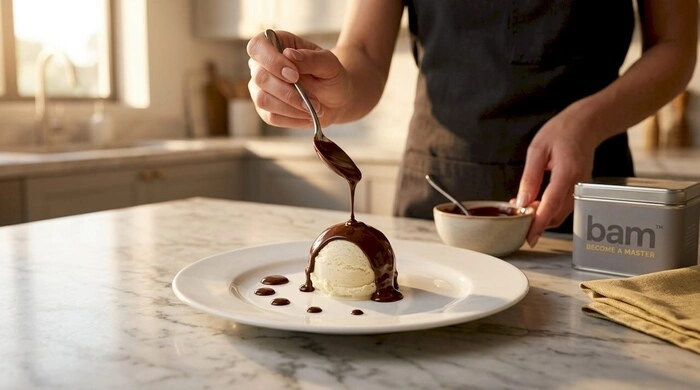
Discover what is chocolate dressings, their types, uses, and delicious recipes. Elevate your dishes with sweet and savory options!
TL;DR:
- Chocolate dressings encompass both glossy dessert sauces and savory cocoa vinaigrettes, each requiring different ingredients and techniques. Proper temperature control and emulsification are essential to achieve the desired texture and flavor, whether in sweet or savory applications. They offer versatile culinary options, elevating both desserts and salads when treated as intentional, carefully prepared components.
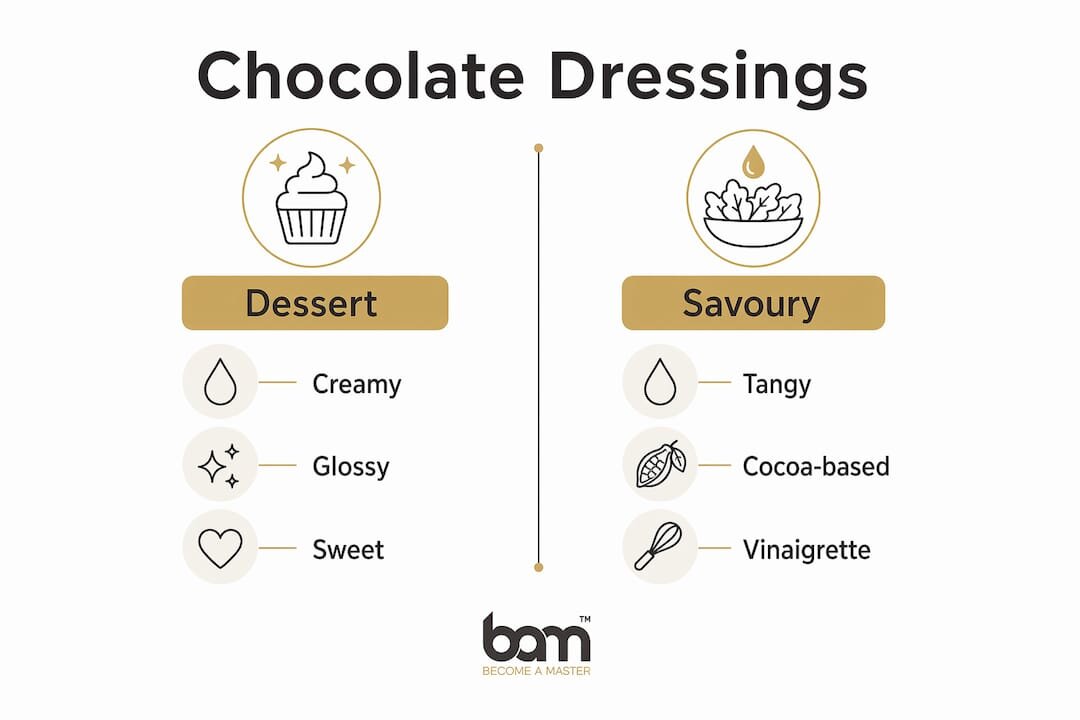
Chocolate dressings are culinary preparations that span two distinct categories: rich, glossy dessert sauces used for plating and drizzling, and savoury vinaigrettes built on cocoa powder, acid, and oil. The term “chocolate dressing” is not a single standardised industry term. In professional kitchens, you will hear it used interchangeably with “chocolate plating sauce,” “chocolate drizzle,” or “chocolate vinaigrette,” depending on context. What unites all of them is chocolate as the dominant flavour agent, applied as a liquid or semi-liquid condiment. Understanding which type you are working with changes everything: the ingredients, the technique, and the result.
Chocolate dressings are thicker, glossier preparations than standard chocolate syrup, designed for visual appeal and flavour delivery on plated desserts or dressed salads. The interpretation of the term depends entirely on context. A pastry chef uses it to mean a pourable plating sauce that clings to a plate and holds decorative swirls. A salad-focused cook uses it to mean a cocoa-forward vinaigrette that balances bitterness with acid and oil.
The dessert category covers sauces made from cocoa powder, cream, butter, and sugar, cooked to a specific viscosity. The savoury category covers emulsified dressings where cocoa pairs with vinegar, mustard, and oil to create something closer to a balsamic vinaigrette with depth. Both are legitimate, both are useful, and both reward attention to technique.
Dessert chocolate dressings share a core set of ingredients: cocoa powder or melted chocolate, sugar, cream or milk, butter, and a thickener such as flour or cornflour. The ratio of fat to liquid determines whether you end up with a pourable drizzle or a spoonable sauce. Vanilla extract and a pinch of salt are standard additions that sharpen the chocolate flavour without adding sweetness.
A reliable approach combines sugar, cocoa powder, and flour in a saucepan, then adds milk and butter before bringing the mixture to a simmer. Stirring constantly for six minutes after the mixture reaches a simmer produces a silky, lump-free texture. This matters because cocoa powder does not dissolve on its own. Without continuous movement and controlled heat, you get a grainy sauce that no amount of whisking will rescue.
For dressings built on chopped chocolate rather than cocoa powder, the technique shifts. Warm cream poured over chopped chocolate, left for five minutes, then whisked gently, creates a glossy milk chocolate sauce with a silky texture. The key is that the cream must be warm, not boiling. Boiling cream can cause the chocolate to seize, turning it into a grainy, separated mass rather than a smooth coating.
Dark chocolate dressings carry a pronounced bitterness that works well over vanilla ice cream, panna cotta, or poached pears. Milk chocolate versions are sweeter and more viscous, suited to drizzling over churros or profiteroles. White chocolate dressings behave differently because white chocolate contains no cocoa solids. They are more prone to seizing and require lower temperatures and more precise timing. Bamchocolate covers this in detail in their guide on white chocolate for cooking, which is worth reading before you attempt a white chocolate plating sauce.
Pro Tip: To achieve a glossy finish on a dessert chocolate dressing, add a small knob of cold butter at the end of cooking and stir it in off the heat. The emulsification gives the sauce a professional sheen without adding heaviness.
Savoury chocolate dressings use cocoa powder combined with acidic components such as vinegar or lemon juice, blended with oil, mustard, and spices. The result is a vinaigrette where cocoa adds earthiness and depth rather than sweetness. A well-known example is a chocolate cherry vinaigrette, which combines cocoa powder, cherry juice, apple cider vinegar, lemon juice, Dijon mustard, cinnamon, and thyme, finished with a neutral oil.
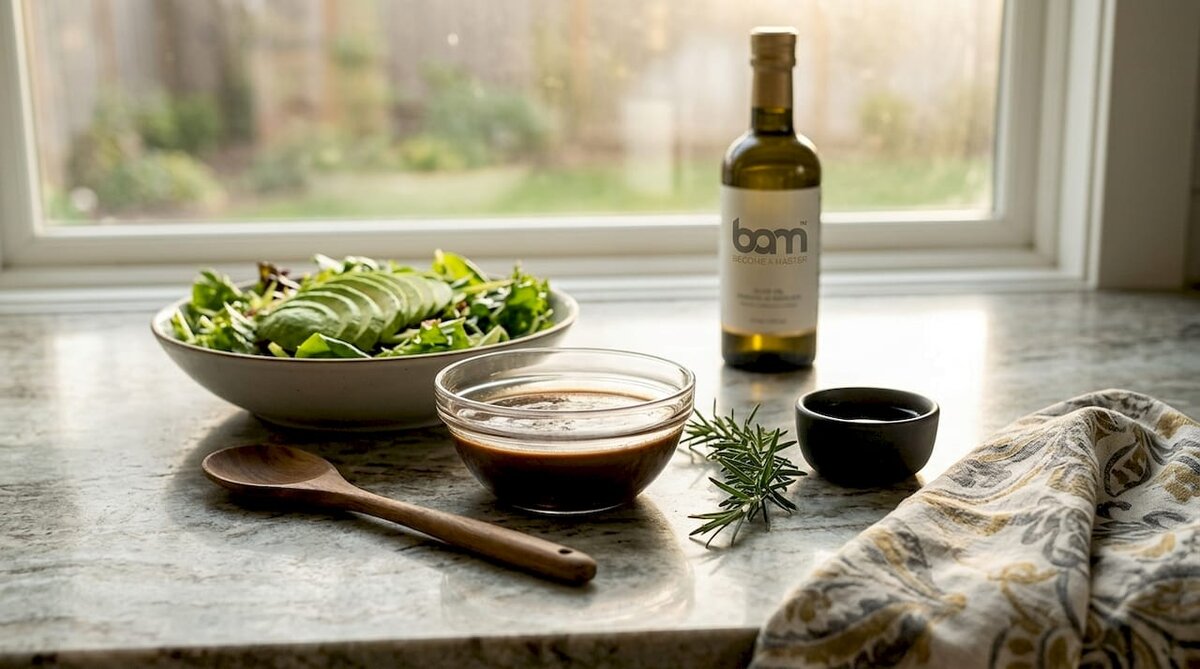
The flavour profile is nothing like a dessert sauce. The bitterness of cocoa cuts through fatty cheeses, complements bitter salad leaves like radicchio or endive, and pairs surprisingly well with white fish and duck. The cacao in savoury dressings also carries natural compounds that add complexity to the overall flavour without requiring additional seasoning.
Key differences from dessert dressings include:
Pro Tip: Add the oil to a savoury chocolate dressing in a slow, steady stream while blending continuously. Rushing this step breaks the emulsion, leaving you with a separated, oily mixture that no amount of shaking will fully restore.
These three terms are often used as if they mean the same thing. They do not. Each has a distinct composition, viscosity, and purpose, and using the wrong one in a recipe produces a noticeably different result.
Chocolate syrup is thin, made from cocoa powder, sugar, and water, designed to dissolve easily into liquids. It is the right choice for chocolate milk, cocktails, or a light drizzle over ice cream where you want flavour without weight. Chocolate sauce is thicker and richer because it contains butter and cream, giving it a velvety body suited to dipping or spooning over desserts. A chocolate dressing sits between these two in the dessert context, or outside both entirely in the savoury context.
| Type | Viscosity | Key ingredients | Best use |
|---|---|---|---|
| Chocolate syrup | Thin, pourable | Cocoa, sugar, water | Mixing into drinks, light drizzling |
| Chocolate sauce | Thick, velvety | Cocoa or chocolate, cream, butter | Dipping, spooning over desserts |
| Dessert chocolate dressing | Medium, glossy | Chocolate, cream, thickener | Plating, decorative swirls, drizzling |
| Savoury chocolate dressing | Light, emulsified | Cocoa, oil, vinegar, mustard | Salads, meats, cheese boards |
Temperature affects all three. Chocolate sauce thickens as it cools and becomes too stiff to pour if left to sit. Syrup remains pourable at room temperature. A dessert chocolate dressing needs to be served at the right temperature to maintain its glossy, flowing consistency on the plate.
Chocolate dressings are more versatile than most home cooks realise. The dessert applications are obvious, but the savoury uses are where things get genuinely interesting.
For dessert applications, consider these uses:
For savoury applications, the possibilities are equally broad. A cocoa vinaigrette works over a salad of bitter leaves, walnuts, and Gorgonzola. It pairs with duck breast, where the bitterness of cocoa mirrors the richness of the meat. Drizzled over grilled white fish with a citrus garnish, it adds an unexpected depth that works because cocoa and citrus are natural partners.
Storage and preparation tips worth knowing:
The ganache technique is closely related to dessert chocolate dressings and worth understanding if you want to control texture precisely. Adjusting the cream-to-chocolate ratio gives you everything from a pourable drizzle to a thick coating sauce.
Chocolate dressings cover two distinct culinary categories: glossy dessert plating sauces and savoury cocoa vinaigrettes, each requiring different ingredients, techniques, and temperature management.
| Point | Details |
|---|---|
| Two distinct types | Dessert dressings use cream and chocolate; savoury dressings use cocoa, oil, and acid. |
| Texture is the priority | Viscosity determines use: thin for drizzling, thick and glossy for plating, light for salads. |
| Technique prevents failure | Gentle heat and continuous stirring stop seizing and graininess in dessert dressings. |
| Emulsification is key | Savoury chocolate dressings require slow oil addition to stay stable and well-balanced. |
| Storage differs by type | Dessert dressings last up to five days; savoury vinaigrettes keep for two weeks refrigerated. |
Most home bakers treat chocolate sauce as an afterthought. You make the cake, you make the mousse, and then you pour something dark and sweet over the top without much thought. That approach works, but it misses what chocolate dressings can actually do when you treat them as a deliberate component rather than a garnish.
The thing I find most underappreciated is temperature control. A dessert chocolate dressing made at the wrong temperature does not just look wrong. It tastes wrong. Too hot and it runs off the plate before anyone sees it. Too cool and it sits in a lump. The window where it behaves exactly as you want is narrower than most recipes admit. Once you understand that, you start treating the final two minutes of preparation with the same care as the rest of the recipe.
The savoury side is where I think the real opportunity lies for culinary enthusiasts. Most people have never tried a cocoa vinaigrette, and the reaction when they do is almost always surprise. It does not taste like chocolate in the way you expect. It tastes like depth. The bitterness of cocoa does something to a salad dressing that balsamic vinegar does in a different way. If you have not tried it, start with a simple version: cocoa powder, Dijon mustard, red wine vinegar, honey, and olive oil. Blend it, taste it, and adjust. You will use it again.
The skill that transfers from dessert dressings to savoury ones is understanding emulsification. Whether you are whisking cream into chocolate or oil into cocoa and vinegar, the principle is the same: add fat slowly, keep things moving, and do not rush. That single habit separates a professional-looking result from a broken, separated mess.
— Andraz
Bamchocolate stocks the baking accessories and additives that make achieving the right texture in chocolate dressings straightforward rather than guesswork. From thickeners and stabilisers to premium cocoa products, the range covers what you need for both dessert plating sauces and savoury vinaigrettes. The 101 BAM pastry recipe set includes professional recipes for chocolate dressings and sauces, giving you a structured starting point if you want to move beyond trial and error. For those building a full confectionery kit, the BAM Basic pastry package brings together the core ingredients and tools suited to making chocolate dressings and pastries at home.
A chocolate dressing is either a glossy dessert plating sauce made from chocolate, cream, and sugar, or a savoury vinaigrette built on cocoa powder, oil, and acid. The term covers both categories, and the context determines which type is meant.
Combine cocoa powder, sugar, flour, milk, and butter in a saucepan, bring to a simmer, and stir continuously for six minutes to achieve a smooth, silky texture. For a richer version, pour warm cream over chopped chocolate, leave for five minutes, then whisk gently.
Yes. A savoury chocolate dressing uses cocoa powder, vinegar, mustard, and oil to create a vinaigrette that pairs well with bitter salad leaves, duck, white fish, and aged cheeses.
Dessert chocolate dressings keep for up to five days in the fridge in a sealed container. Savoury chocolate vinaigrettes, when properly emulsified, keep for two weeks refrigerated.
Chocolate syrup is thin, water-based, and designed for mixing into drinks. A chocolate dressing is thicker, glossier, and built for plating or dressing food, using cream, butter, or oil depending on whether it is sweet or savoury.





 Confectionery tips



 Slovenščina
 Hrvatski
 Deutsch
 Italiano
 Česky
Česky
 Polski
 Magyar
 Français
 Slovák
 Nederlands
 Español