 info@bamchocolate.com
  Login
Login 

 en
en 
 BAM Cake converter
  Login
Login Claudia
Avtorica vsebin


 Reading time:
9 minutes
Reading time:
9 minutes 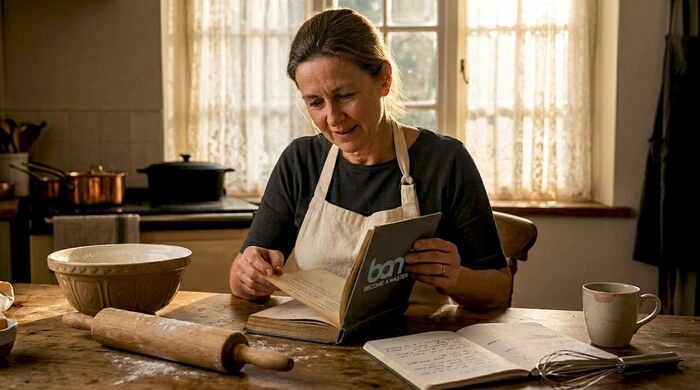
Discover the role of recipe books in baking and why they deliver reliable results. Elevate your home baking skills with expert guidance!
TL;DR:
- Well-edited recipe books offer home bakers reliable, thoroughly tested results, and deeper understanding of baking science.
- They preserve culinary heritage and provide a stable foundation for experimentation, unlike variable online recipes.
Recipe books are authoritative, tested collections that give home bakers dependable techniques, reliable results, and the knowledge to grow beyond following instructions. The role of recipe books in baking extends far past a list of ingredients. A well-edited cookbook combines science, craft, and inspiration in a single physical object. Baking cookbook sales surged 80% in 2025 despite social media recipe saturation, which confirms that home bakers still trust the printed page when it matters most.
Recipe reliability is the single greatest advantage a well-produced cookbook holds over a social media post or a blog recipe. Every recipe in a published book passes through editorial oversight, multiple test rounds, and professional copyediting before it reaches you. Jennifer Sit, editorial director, highlights how careful testing and copyediting keep cookbooks relevant and trustworthy in a way that unvetted online content simply cannot match.
The contrast with social media is stark. A recipe shared on a short-form video platform may have been tested once, filmed for visual appeal, and never checked for accuracy at altitude, humidity, or with different oven types. A cookbook recipe, by contrast, is developed over months. It accounts for variables that a 60-second video ignores entirely.
Physical production values reinforce this trust. High-quality photography, clear layout, and precise measurements signal that a publisher invested in the content. That investment filters out careless work before it reaches your kitchen. You can also check when biscuits and cakes are ideally baked as a practical example of the kind of detail that well-edited guides consistently deliver.
Key differences between cookbook recipes and social media recipes:
Pro Tip: When you try a new recipe from a book for the first time, follow it exactly as written. Only adjust on the second or third attempt, once you understand how the recipe behaves.
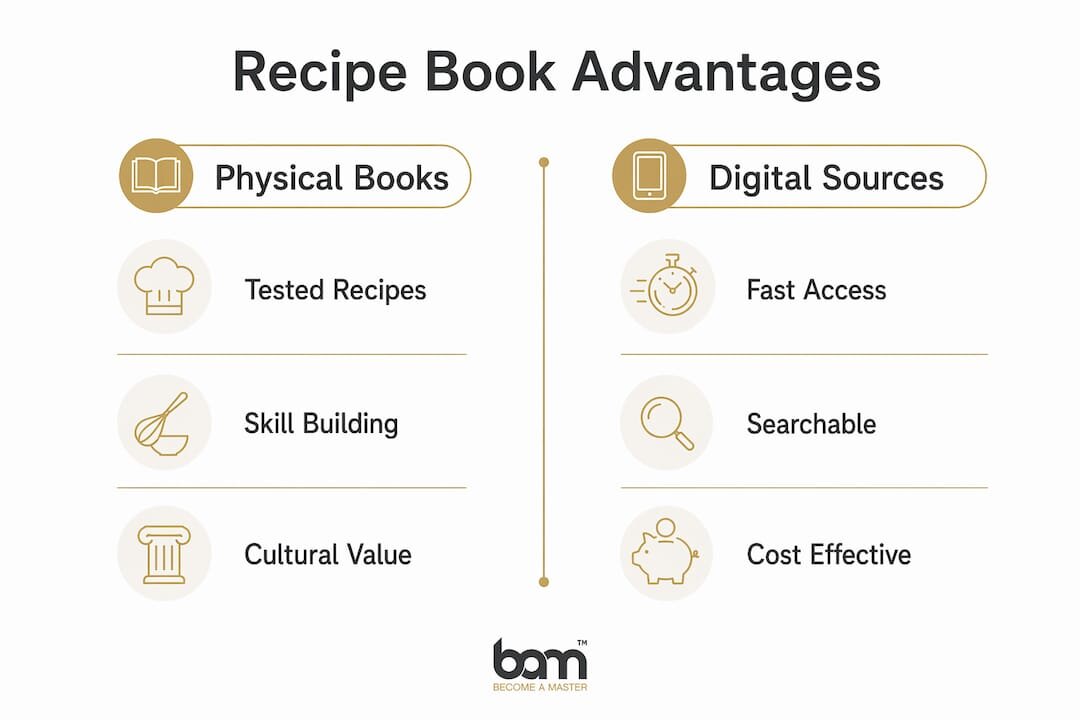
Baking is a discipline grounded in chemistry, and recipe books are the most accessible way to learn that chemistry at home. Baking science books educate home bakers on ingredient functions, ratios, and troubleshooting, producing measurably better outcomes over time. Understanding why butter temperature affects pastry texture, or why bread dough needs a specific hydration level, transforms you from a recipe follower into a genuine baker.
The practical skill progression that recipe books support follows a clear path:
“The best baking books do not just tell you what to do. They tell you why. That ‘why’ is what separates a baker who can follow a recipe from one who can create one.”
This skill-building function is what separates the best baking recipe books from simple collections of instructions. Books by authors such as Yotam Ottolenghi, Claire Saffitz, and Nicola Lamb consistently explain technique alongside method, making them reference texts rather than one-use guides.
The comparison between physical cookbooks and digital recipe sources is not simply about format. It is about the quality of the experience and the permanence of the knowledge. Physical cookbooks offer an irreplaceable experience of learning, cultural connection, and emotional satisfaction that a screen cannot replicate. Writer Emiko Davies describes how touching and leafing through a cookbook provides inspiration that online browsing consistently fails to match.
| Feature | Physical recipe book | Digital or online recipe |
|---|---|---|
| Recipe testing | Multiple rounds, editorially verified | Variable; often untested |
| Authorship protection | Preserves authorship and culinary identity | Recipes risk dilution and loss of context |
| Cultural preservation | Archived in libraries; part of culinary heritage | Ephemeral; links break, platforms close |
| User experience | Tactile, immersive, distraction-free | Fast but fragmented and screen-dependent |
| Long-term value | Collectible; increases in personal and monetary value | No ownership; content can be deleted |
The cultural preservation argument is particularly compelling. The National Library of Israel’s acquisition of the world’s earliest known kosher cookbook demonstrates how physical books carry culinary knowledge across centuries. No social media platform will exist in 500 years. A well-bound cookbook might.
Digital content has genuine advantages. It is fast, searchable, and free. But speed and cost are not the same as quality. A recipe found via a search engine may rank highly because of SEO, not because it works. A cookbook recipe ranks highly in your kitchen because it has been tested.
Pro Tip: Keep a small collection of three to five cookbooks that cover your core baking interests rather than accumulating dozens. Depth of familiarity with a few trusted books outperforms shallow knowledge of many.
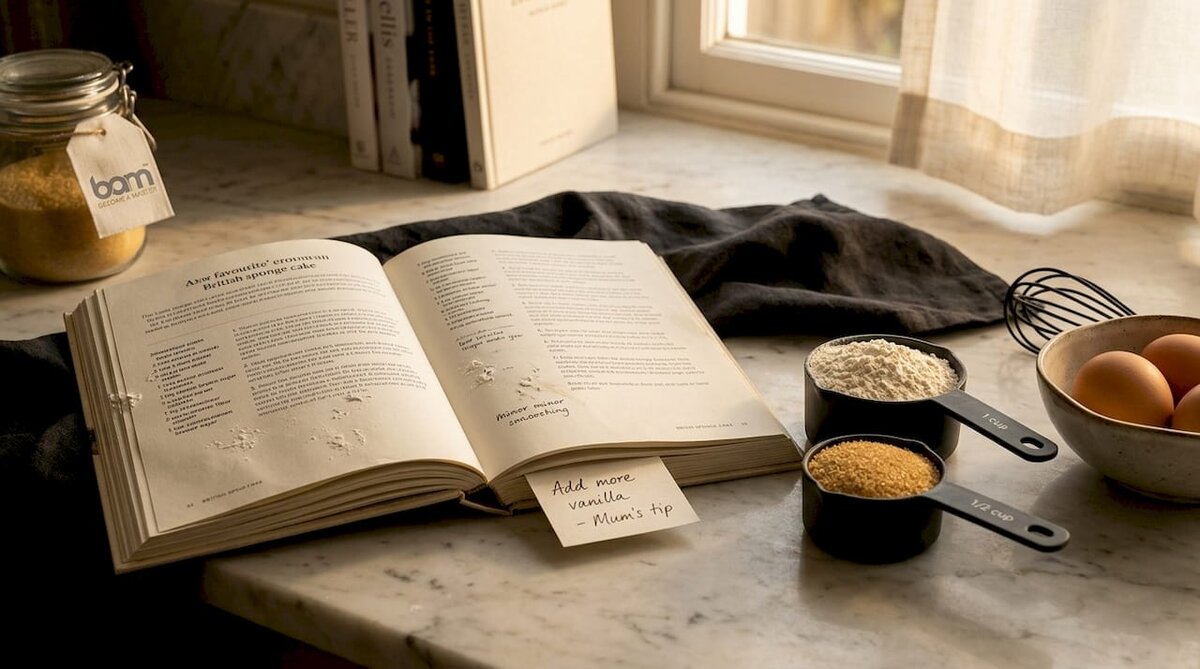
Recipe books serve as controlled references that allow you to adjust one variable at a time while keeping all other methods constant. This is the most underused function of a good cookbook. Tested recipes provide a stable baseline from which you can experiment with genuine confidence, because you know exactly what the recipe produces when followed correctly.
Practical ways to use recipe books beyond following instructions:
Cookbooks develop a cohesive culinary world combining recipes, visuals, stories, and personality. That coherence makes them better companions for experimentation than a disconnected collection of online recipes, because the author’s underlying philosophy runs through every page.
Recipe books remain the most reliable foundation for baking skill development because their editorial rigour, tested recipes, and cultural permanence cannot be replicated by digital sources alone.
| Point | Details |
|---|---|
| Editorial reliability | Cookbook recipes undergo multiple test rounds and professional copyediting, producing consistent results. |
| Skill development | Science-based baking books explain ingredient functions and ratios, enabling creative remixing rather than passive following. |
| Cultural value | Physical cookbooks preserve culinary heritage across generations in ways that ephemeral online content cannot. |
| Experimental use | Tested recipes serve as stable baselines, allowing bakers to adjust one variable at a time and track improvements. |
| Long-term investment | A small collection of trusted books, annotated over time, outperforms a large library of unread or untested guides. |
I have spent years watching home bakers cycle through phases: the initial excitement of online recipes, the frustration when results are inconsistent, and then the quiet return to a well-worn cookbook. The pattern is almost universal. Digital recipes are convenient, but convenience is not the same as confidence.
What strikes me most about the best baking guides is that they treat you as a learner, not just a follower. A book by Claire Saffitz or Nicola Lamb does not simply list steps. It explains the reasoning, anticipates failure points, and builds your understanding cumulatively across chapters. That pedagogical structure is something an algorithm-driven feed cannot replicate, because feeds are designed to keep you scrolling, not to teach you anything durable.
The argument that cookbooks and digital content are in competition misses the point entirely. They serve different functions. Online sources are excellent for quick inspiration and discovering new ideas. Physical cookbooks are where you go to actually learn. The bakers I respect most use both, but they treat their cookbooks as the authoritative source and online content as supplementary.
My honest recommendation: invest in two or three genuinely excellent baking books and use them until the spines crack. The knowledge you build from a single well-understood cookbook is worth more than a saved folder of a hundred untested online recipes.
— Andraz
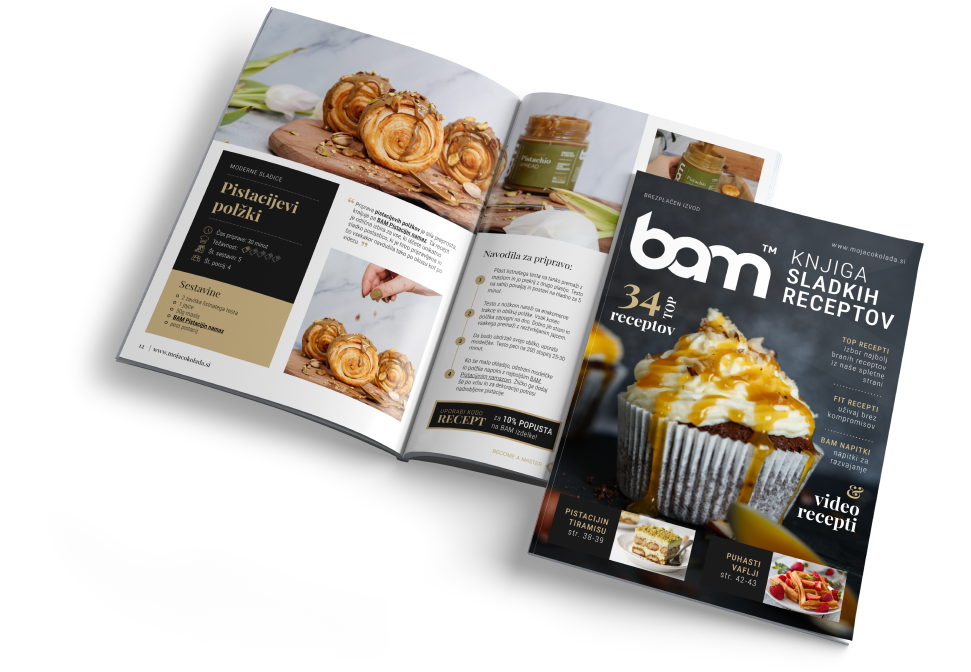
Understanding baking techniques is only half the work. The other half is having the right ingredients to hand. Bamchocolate stocks a full range of baking accessories and ingredients designed to complement the techniques you learn from recipe books, from precision tools to premium confectionery components. For bakers ready to move from reading to making, the 101 BAM pastry recipe bundle pairs tested recipes with quality ingredients in a single package. If you are building your home baking kit from scratch, the BAM Basic pastry package provides a practical starting point. Quality ingredients make a measurable difference to results, and Bamchocolate sources with that standard in mind.
Recipe books serve as tested, editorially verified references that provide reliable recipes and explain the science behind baking techniques. They give home bakers a stable foundation for both following instructions and developing independent skills.
Physical cookbooks undergo rigorous testing and editorial review, making them more reliable than most online recipes. They also preserve authorship and culinary heritage in ways that digital platforms cannot guarantee long-term.
Baking science books explain ingredient functions, ratios, and the chemistry behind each step, which allows bakers to troubleshoot failures and adapt recipes with confidence rather than guessing.
Use a tested recipe as a controlled baseline and change only one variable at a time, recording outcomes in a baking journal. This method, supported by professional bakers and enthusiasts, produces measurable skill improvements over time.
The best baking recipe books combine clear technique explanations with tested recipes and strong editorial standards. Authors such as Claire Saffitz, Nicola Lamb, and Yotam Ottolenghi consistently meet this standard across their published works.



 Confectionery tips



 Slovenščina
 Hrvatski
 Deutsch
 Italiano
 Česky
Česky
 Polski
 Magyar
 Français
 Slovák
 Nederlands
 Español