 info@bamchocolate.com
  Login
Login 

 en
en 
 BAM Cake converter
  Login
Login Claudia
Avtorica vsebin


 Reading time:
10 minutes
Reading time:
10 minutes 
Explore why choose sugar-free sweets for weight loss, dental health, and smart choices. Discover real benefits and expert tips today!
TL;DR:
- Choosing sugar-free sweets can significantly reduce calorie intake and support blood sugar management. However, not all sweeteners are tolerated equally, and moderation remains essential despite their benefits. They serve as useful tools for specific dietary needs but should be integrated thoughtfully into a balanced, whole-food-focused diet.
Sugar-free sweets have moved well beyond the dusty corner of the pharmacy shelf. More people are reaching for them as a deliberate choice, whether they are managing blood sugar, cutting calories, or simply trying to be more thoughtful about what they eat. But why choose sugar-free sweets in the first place, and are they actually better for you? The answer is more nuanced than most packaging lets on. This guide cuts through the marketing noise and gives you a clear, evidence-informed picture of the real benefits, the genuine limitations, and how to make smart choices.
| Point | Details |
|---|---|
| Calorie reduction is real | Sugar-free sweets can contain 40–60% fewer calories, making them useful for weight management. |
| Not all sweeteners are equal | Erythritol and xylitol are better tolerated than maltitol or sorbitol, which can cause digestive discomfort. |
| Dental health gains | Xylitol actively inhibits cavity-causing bacteria, offering a benefit regular sweets cannot. |
| Moderation still matters | Medical guidelines recommend non-nutritive sweeteners for short-term use, not as permanent dietary staples. |
| Label reading is non-negotiable | Sugar-free does not mean calorie-free; checking total carbs and fat content is always worthwhile. |
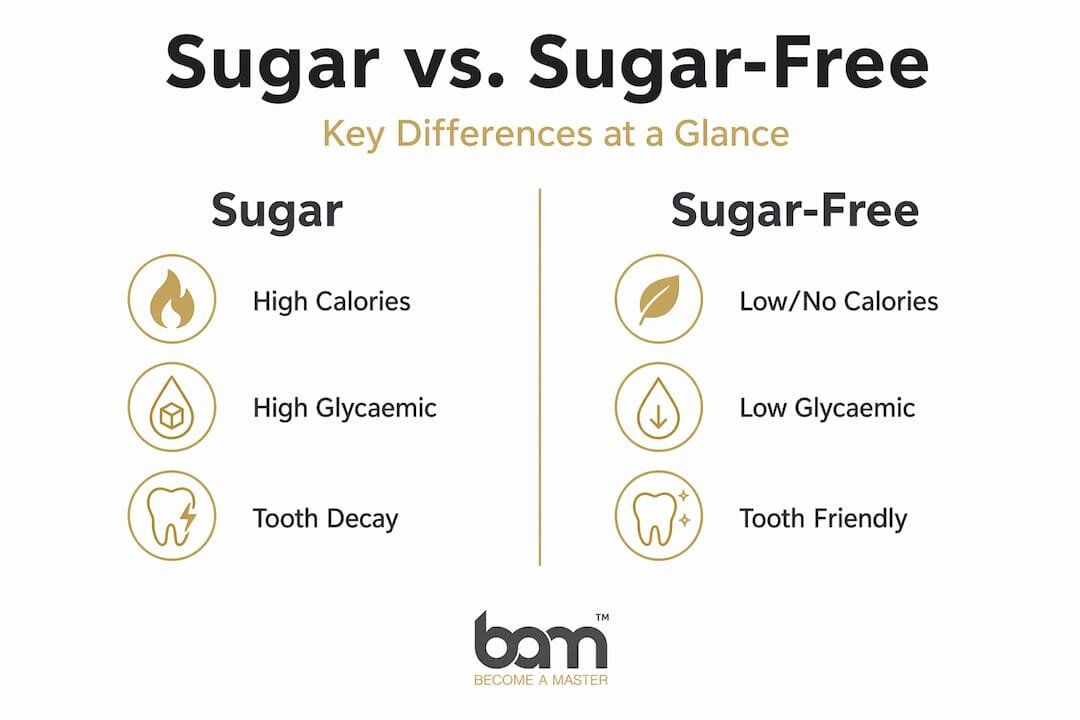
Before weighing up the pros and cons, it helps to understand what “sugar-free” actually means on a product label. In most regulatory frameworks, a product labelled sugar-free contains less than 0.5g of sugar per serving. That does not mean it contains no sweetness. It means the sweetness comes from something other than sucrose, glucose, or fructose.
The most common alternatives fall into three categories.
Sugar alcohols (also called polyols) include xylitol, erythritol, maltitol, and sorbitol. Despite the name, they contain no alcohol. They occur naturally in small amounts in some fruits and vegetables, but are produced commercially for use in confectionery. They provide sweetness with fewer calories than sugar and have a lower impact on blood glucose.
Natural sweeteners such as stevia and monk fruit extract are derived from plants and contain virtually no calories. Stevia, for instance, is 200 to 300 times sweeter than sugar, so only tiny amounts are needed.
Artificial sweeteners such as aspartame, saccharin, and sucralose are synthetically produced and intensely sweet. They are widely used in beverages and some confectionery.
Here is how the most common sugar substitutes compare:
| Sweetener | Calories per gram | Glycaemic index | Digestive tolerance |
|---|---|---|---|
| Erythritol | 0.2 | 0 | High |
| Xylitol | 2.4 | 7 | Moderate |
| Maltitol | 2.1 | 35 | Low |
| Stevia | 0 | 0 | High |
| Sorbitol | 2.6 | 9 | Low |
One common misconception is that all sugar alcohols behave identically. They do not. Erythritol is absorbed largely in the small intestine and excreted unchanged, which is why it causes far fewer digestive issues than maltitol, which ferments in the large intestine. Knowing this distinction matters when you are choosing products.
There are genuine, research-supported reasons to opt for sugar-free sweets, particularly if you have specific health goals or dietary requirements. Here are the most significant ones.
Calorie reduction. Sugar-free sweets can contain 40 to 60% fewer calories than their traditional counterparts. For someone managing their weight without wanting to give up treats entirely, this is a meaningful difference over time.
Blood sugar management. Most sugar substitutes have a significantly lower glycaemic index than sucrose. Xylitol has a glycaemic index of 7 compared to sugar’s 60 to 70, making sugar-free sweets a practical option for people with diabetes or prediabetes who still want to enjoy something sweet.
Dental health. This is one area where sugar-free sweets genuinely outperform regular ones. Xylitol reduces plaque by up to 50% by inhibiting the bacteria responsible for tooth decay and supporting saliva production. It may also assist with enamel repair. That is an active benefit, not just the absence of harm.
Diet compatibility. Sugar-free sweets fit naturally into ketogenic, low-carb, and diabetic-friendly eating plans. They allow people following these approaches to satisfy a sweet craving without derailing their progress.
Psychological relief. Feeling deprived is one of the most common reasons people abandon dietary changes. Having a satisfying sweet option available reduces that pressure. Sugar-free sweets can serve as a practical buffer, helping you stay consistent with broader health goals.
Improved taste and variety. Modern sugar-free confectionery has come a long way from the chalky, medicinal-tasting products of the 1990s. Formulation techniques have improved considerably, and the range of flavours and textures now available makes them genuinely enjoyable.
Pro Tip: If dental health is your priority, look specifically for products sweetened with xylitol rather than other sugar alcohols. The dental benefits are specific to xylitol and are not shared by erythritol or stevia.
For a deeper look at how natural sweeteners compare to sugar in terms of metabolic impact, Bamchocolate has a useful resource worth reading alongside this guide.
The benefits above are real, but so are the caveats. A balanced view of sugar-free sweets requires acknowledging where the evidence gets complicated.
Medical guidelines urge moderation. The 2025 ADA standards recommend using non-nutritive sweeteners for short-term caloric reduction rather than as permanent dietary staples. They are transition tools, not long-term solutions in isolation.
WHO cautions for non-diabetics. WHO 2023 guidance advises that people without diabetes should be cautious about using non-sugar sweeteners for weight control or to reduce the risk of non-communicable diseases, citing potential associations with type 2 diabetes and cardiovascular disease in long-term observational data.
Digestive discomfort is a real risk. Maltitol causes moderate to severe bloating in the majority of people at doses of 40g, and sorbitol has a similarly poor tolerance profile. If you are new to sugar-free sweets, starting with small portions and choosing products made with erythritol or stevia is sensible.
Sugar-free does not mean calorie-free. Many sugar-free products are still energy-dense because of their fat and carbohydrate content. Some products remain high in calories despite carrying a sugar-free label, and they can lack the satiety signals that whole foods provide.
Sweet cravings may persist. Experts note that overreliance on sugar-free sweets can reinforce rather than reduce your appetite for sweetness. Using them as a crutch rather than as part of a broader dietary shift may work against you in the long run.
Long-term data is still limited. Research into the effects of regular sugar alcohol consumption on the gut microbiome is ongoing. The picture is not yet complete, and caution is reasonable.
Pro Tip: Always check the total carbohydrate count on the label, not just the sugar line. In many countries, sugar alcohols are listed separately but still contribute to total carbs and, in some cases, to net calorie intake.
Getting the most from sugar-free sweets comes down to knowing what to look for and how to use them. Here is a practical approach.
Read the ingredient list, not just the front of the pack. The sweetener used matters enormously. Erythritol and xylitol are generally the best-tolerated options. Maltitol and sorbitol are worth avoiding if you have a sensitive digestive system.
Check serving sizes carefully. Sugar alcohols can cause discomfort in larger quantities even when individual servings seem modest. Sticking to the suggested portion, at least initially, is a reasonable starting point.
Look for transparent labelling. Products that clearly list their sweetener type, total carbohydrates, and calorie content are generally more trustworthy. Vague labelling often signals a less carefully formulated product.
Prioritise quality over novelty. A sugar-free sweet made with high-quality ingredients and a well-tested recipe will deliver a better experience than one that simply replaces sugar with the cheapest available alternative.
Treat them as part of a broader diet. Sugar-free sweets work best when they complement a diet rich in whole foods. They are not a substitute for vegetables, protein, or fibre. Think of them as a considered indulgence, not a nutritional upgrade.
Experiment gradually. If you are new to sugar-free options, introduce one product at a time and pay attention to how your body responds. Tolerance to sugar alcohols varies significantly between individuals.
Use them to reduce, not replace. The goal for most people should be to gradually reduce overall sweetness dependence. Sugar-free sweets can help with that transition, but they are most effective when paired with a genuine effort to recalibrate your palate over time.
Bamchocolate’s guide on making healthier confectionery offers practical recipe ideas that align with these principles if you want to take things further at home.
The sugar-free sweets market is growing, and the products available in 2026 are considerably more sophisticated than those from even five years ago. A few developments are worth knowing about.
The direction of travel is positive, but the science is still catching up with the marketing. Staying informed and reading beyond the front of the packaging remains the most reliable approach.

I’ve spent a lot of time looking at the evidence on sugar-free sweets, and my view is straightforward. They are useful tools for specific situations. They are not health foods, and treating them as such is where most people go wrong.
What I’ve found is that the people who benefit most from sugar-free sweets are those who use them deliberately. Someone managing type 2 diabetes who wants to enjoy a piece of chocolate without a blood sugar spike. A person reducing their overall sugar intake who needs a reliable option for moments of craving. These are legitimate, practical applications.
What I’ve also seen is the other pattern. People who switch entirely to sugar-free versions of everything they used to eat and then wonder why their relationship with sweet food hasn’t changed. The sweetness is still there. The habit is still there. Only the sugar has changed.
My take is this: use sugar-free sweets to create space for better habits, not to replicate old ones indefinitely. Read the labels carefully, pay attention to how your body responds to different sweeteners, and resist the idea that “sugar-free” on the packaging means the decision is already made for you. It is a starting point, not a conclusion.
— Andraz
If you are ready to put these principles into practice, Bamchocolate offers a well-curated selection of products designed for exactly this kind of thoughtful approach. The baking additives range includes high-quality ingredients suited to sugar-free and lower-sugar recipes, with clear product information so you know what you are working with. For those who want to start creating their own confectionery at home, the BAM Basic pastry package provides a practical foundation for experimenting with healthier sweet options. Bamchocolate’s focus on ingredient quality and transparency makes it straightforward to build a sugar-free confectionery habit that actually holds up over time.
Sugar-free means the product contains less than 0.5g of sugar per serving. Sweetness typically comes from sugar alcohols, natural sweeteners like stevia or monk fruit, or artificial sweeteners instead.
Products containing xylitol actively inhibit cavity-causing bacteria and can reduce plaque by up to 50%, making them genuinely better for dental health than sugar-sweetened alternatives.
Yes, particularly those made with maltitol or sorbitol. These sugar alcohols ferment in the large intestine and can cause bloating or a laxative effect, especially in larger quantities. Erythritol is significantly better tolerated.
Most sugar-free sweets have a much lower glycaemic index than regular sweets and can be a practical option for people managing blood sugar. The 2025 ADA standards support their use for caloric reduction, though moderation is still recommended.
They can contribute to calorie reduction, as they typically contain 40 to 60% fewer calories than traditional sweets. However, they are not a weight loss tool on their own and work best as part of a broader dietary approach.



 Confectionery tips



 Slovenščina
 Hrvatski
 Deutsch
 Italiano
 Česky
Česky
 Polski
 Magyar
 Français
 Slovák
 Nederlands
 Español