 info@bamchocolate.com
  Login
Login 

 en
en 
 BAM Cake converter
  Login
Login Claudia
Avtorica vsebin


 Reading time:
9 minutes
Reading time:
9 minutes 
Discover why baking with reduced sugar can enhance texture, flavor, and health. Learn the science to master lower-sugar recipes today!
TL;DR:
- Reducing sugar in baking affects moisture, color, and structure, not just sweetness, requiring careful adjustment.
- A gradual reduction of 10 to 25 percent can maintain quality and provide health benefits without compromising taste.
Most home bakers assume sugar is in a recipe purely for sweetness. That assumption leads to a predictable mistake: cutting sugar and wondering why the result is dry, pale, and oddly dense. The truth is that why baking with reduced sugar is worth understanding goes far beyond calories. Sugar shapes texture, moisture, colour, and shelf life in ways that affect every bake you make. Once you understand what sugar actually does structurally, reducing it becomes a skill rather than a gamble. This guide covers the science, the health evidence, and the practical steps to do it well.
| Point | Details |
|---|---|
| Sugar does more than sweeten | It controls moisture, tenderness, browning, and structure in every bake. |
| Gradual reduction works best | Cutting sugar by 25 to 30% at a time avoids dryness and texture failures. |
| Health benefits are well documented | Low-sugar bakes can significantly reduce post-meal glucose and insulin spikes. |
| Sweetener swaps carry trade-offs | Stevia and erythritol reduce glycaemic impact but require recipe adjustments. |
| Storage changes with less sugar | Reduced sugar baked goods are best eaten within 24 to 48 hours or frozen. |
Sugar is not a passive ingredient. It is one of the most structurally active components in any baked recipe, and removing it alters moisture, colour, and texture in ways that can ruin a bake entirely. Understanding what sugar does at each stage of baking is the foundation for reducing it successfully.
Here is what sugar contributes beyond flavour:
As food scientist Jason Halford explains, removing sugar breaks the fundamental rules of baking by disrupting structure, moisture, and mouthfeel all at once. That is not a reason to avoid reducing sugar. It is a reason to do it thoughtfully.
Pro Tip: If your reduced-sugar bake comes out pale, try adding a small amount of honey or molasses to your recipe. Both brown readily and can restore colour without adding significant refined sugar.
The case for reducing sugar in home baking is not just about personal preference. The science is clear, and the dietary guidance is becoming more specific.
The updated US dietary guidance for 2025 to 2030 recommends no more than 10g of added sugars per meal, with none recommended in a genuinely healthy diet. That is a significant tightening from previous guidance and reflects growing concern about the metabolic consequences of high sugar intake. While these are American guidelines, the underlying evidence on added sugar and metabolic health applies broadly.
The most striking research comes from a randomised, double-blind study comparing standard muffins with low-sugar alternatives. Participants eating the low-sugar muffins showed 55% lower peak glucose and 62% lower insulin responses over five hours, with no meaningful difference in taste ratings. That is a substantial physiological difference from a relatively modest recipe change.
“Sensory ratings were similar between the standard and modified muffin, suggesting that reducing sugar in baked goods does not have to come at the cost of enjoyment.”Postprandial glycemia and insulinemia responses to a standard and modified muffin in healthy adults and adults with type 2 diabetes, MDPI Foods, 2024
For people managing or looking to prevent type 2 diabetes, this matters considerably. Repeated blood sugar spikes after meals contribute to insulin resistance over time. Choosing lower-sugar baked goods regularly is one practical way to reduce that load without abandoning home baking altogether.
There is also evidence that sweeteners can reduce glycaemic response without increasing hunger or altering appetite hormones significantly, based on randomised crossover trials using sweeteners in biscuits. This is relevant for bakers who want to swap sugar rather than simply remove it.
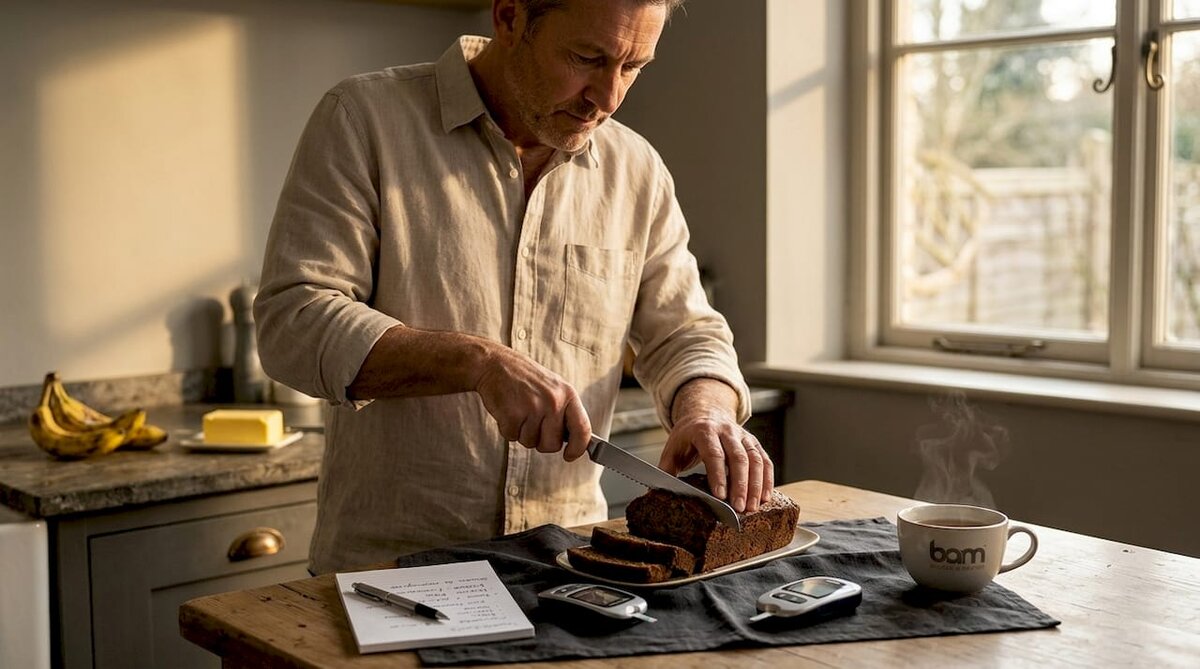
Knowing the benefits of reduced sugar baking is one thing. Knowing what will go wrong in your kitchen is another. Here are the most common trade-offs, in order of how often they catch bakers out:
The key lesson here is that total sugar removal is rarely practical or necessary. Gradual reduction, paired with compensating adjustments, produces far better results than cutting sugar dramatically in one go.
Pro Tip: When reducing sugar in a cake recipe, add an extra tablespoon of natural yoghurt or soured cream to compensate for lost moisture. It will not restore sweetness, but it will keep the crumb tender.
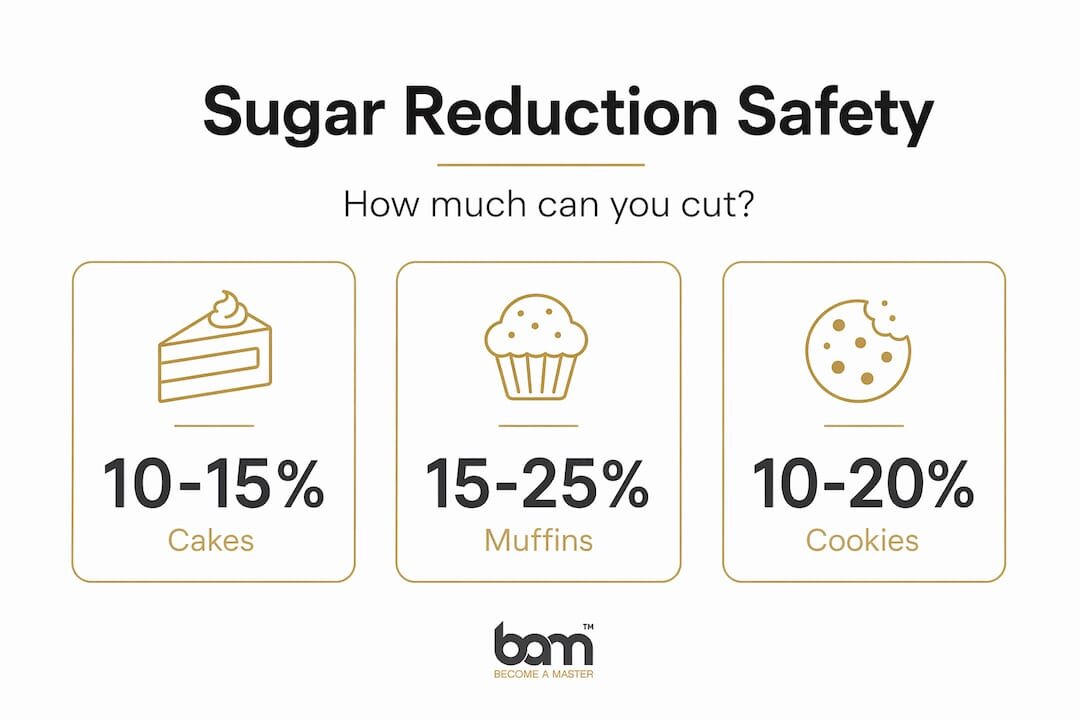
The good news is that reducing sugar in baking is a learnable skill, and there are clear guidelines for where to start. The safe reduction ranges vary by bake type, and staying within them prevents most common failures.
| Bake type | Recommended sugar reduction | Key adjustment needed |
|---|---|---|
| Muffins | 15 to 25% | Add extra fruit or spice for flavour depth |
| Cookies | 10 to 20% | Expect less spread; flatten dough slightly before baking |
| Cakes | 10 to 15% | Add yoghurt or buttermilk to maintain moisture |
| Quick breads | 15 to 25% | Increase vanilla or cinnamon to compensate for reduced sweetness |
Reducing sugar by 25 to 30% is the practical starting point recommended by clinical dietitians. Beyond that threshold, the structural effects become harder to manage without significant recipe reformulation.
Here are the most reliable methods for successful low-sugar baking:
For specific guidance on adjusting your recipes, the practical tips for baking cakes resource from Bamchocolate covers personalising sugar reductions while keeping your bakes genuinely enjoyable.
I used to think reducing sugar was mostly about willpower. You want a healthier bake, so you just use less. What I found, after a number of genuinely disappointing results, is that it is actually about understanding what you are replacing.
The first time I cut sugar by half in a Victoria sponge, the result was edible but joyless. Pale, dry, and oddly chewy. I did not understand why until I started looking at what sugar was doing beyond sweetness. Once I understood the hygroscopic properties, the aeration role, the browning chemistry, everything changed. I stopped treating sugar reduction as subtraction and started treating it as reformulation.
What I have learned is that the 10 to 20% range is where most home bakers should spend their time. It is enough to make a meaningful difference to the sugar content without requiring a complete overhaul of your recipe. Beyond 25%, you need to be adding something back, whether that is fruit, yoghurt, a sweetener blend, or modified flour.
The misconception I hear most often is that low-sugar baking means low-quality baking. That has not been my experience at all. Some of the most flavourful bakes I have made have been the ones where I was forced to compensate with spice, fruit, and better-quality chocolate. Reducing sugar often pushes you toward better ingredients overall.
Healthier baking is not about deprivation. It is about making deliberate choices with a clear understanding of what each ingredient does.
— Andraz
Bamchocolate offers a range of products designed to support quality baking, including when you are working with less sugar. The baking accessories range includes additives that help maintain moisture and texture in reduced sugar recipes, addressing the most common structural challenges directly.
For bakers who want a structured starting point, the 101 BAM pastry recipe book includes recipes developed with healthier baking techniques in mind, making it straightforward to apply sugar reduction without guesswork. The BAM Basic pastry package is a practical set for creating satisfying sweet treats with balanced, considered sweetness. Browse the full range at Bamchocolate to find the right tools for your reduced sugar baking goals.
Sugar controls moisture retention, tenderness, browning, aeration, and shelf life. It is a structural ingredient, not just a flavouring, which is why removing it changes the texture and appearance of baked goods significantly.
Safe reduction ranges vary by bake type: 10 to 20% for cookies, 15 to 25% for muffins, and 10 to 15% for cakes. Beyond these ranges, structural failures such as dryness and density become difficult to correct.
Yes, with some caveats. Erythritol has minimal blood sugar impact and bakes reasonably well. Stevia works at low concentrations but can turn bitter in larger amounts. Blending two sweeteners usually gives the most balanced result.
Research shows that sensory ratings remain similar when sugar is reduced moderately in recipes like muffins. Increasing spice, vanilla, and ripe fruit helps compensate for reduced sweetness without a noticeable drop in enjoyment.
Best eaten within 24 to 48 hours or frozen immediately after cooling. Lower sugar reduces the water-binding that slows staling, so these bakes go off faster than standard recipes.




 Confectionery tips



 Slovenščina
 Hrvatski
 Deutsch
 Italiano
 Česky
Česky
 Polski
 Magyar
 Français
 Slovák
 Nederlands
 Español