 info@bamchocolate.com
 Login


 en

 BAM Cake converter
 Login
Claudia
Avtorica vsebin


 Reading time:
10 minutes
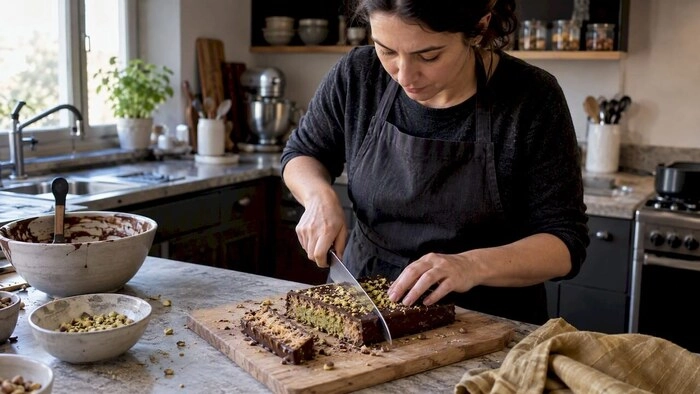
Learn why Dubai chocolate bars went viral, how pistachio supply faces pressure, and how to make a crunchy kataifi version at home with tested techniques.
Dubai-style pistachio chocolate is a filled bar built on chopped kataifi pastry and a pistachio-tahini cream inside a chocolate shell, and it has become one of the most talked-about sweet treats of the past two years. Two forces explain the surge: viral short-form video content and a pistachio market under real supply pressure. We cover both, then show you how to make a version at home.
Dubai chocolate refers to a specific construction, not just a flavour. According to the Wikipedia entry on Dubai chocolate, the bar pairs chopped kataifi (also called kadayif, a shredded pastry usually used in Middle Eastern desserts) with a pistachio-tahini cream, all enrobed in chocolate. The combination gives three things most bars do not: audible crunch, a nutty-savoury filling, and a contrast between warm pistachio and tahini against cool chocolate.
The origin traces to a bar created by the FIX brand in Dubai, and an interview with co-founder Sarah Hamouda for MOJEH describes the recipe as being inspired by knafeh, the layered Middle Eastern pastry, with deliberate attention to preserving its textural cues inside a chocolate format. The brand’s approach, as described in that interview, favoured measured scaling over rushing wider distribution.
What makes the format work on a sensory level:
The spread of Dubai chocolate followed a familiar but fast pattern, and the practical consequences showed up in supermarkets within months.
The scarcity itself became part of the appeal. A bar you cannot easily buy generates more content than one sitting on every shelf, and that dynamic kept the trend circulating well after the first viral clips faded.
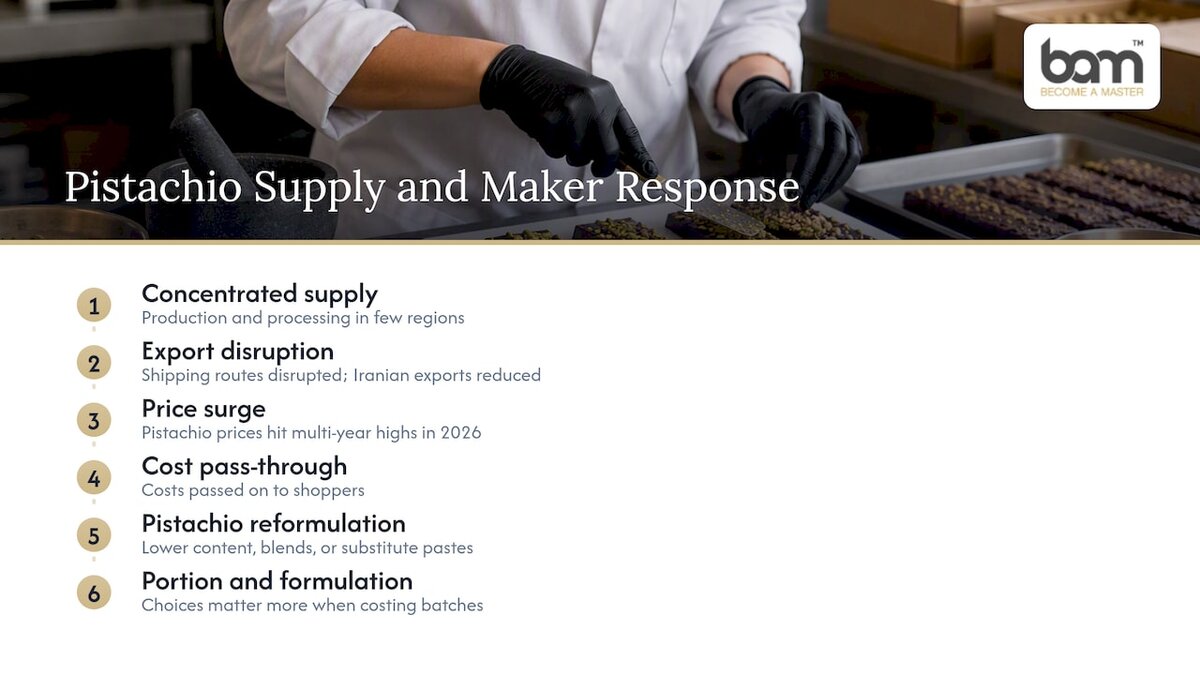
The trend did not happen in a market vacuum. Pistachio prices have climbed sharply, which matters for anyone producing or buying pistachio-based confectionery at scale.
Pistachio prices reached multi-year highs in 2026, according to commodity price analysis, which ties the increase to logistics and export disruptions linked to Middle East shipping routes and reduced Iranian export volumes. For a nut that was already relatively expensive, that is a meaningful jump.
Pistachios sit in an exposed position in the supply chain because so much of global production and processing is concentrated in a small number of regions. When shipping routes or export flows are disrupted, there is little slack elsewhere to absorb the gap, and prices move quickly.
For chocolate makers, the practical fallout is straightforward: costs get passed through to shoppers, and some producers shift toward lower pistachio content, pistachio blends, or substitute pastes to hold a price point. That is also why portion control and formulation choices matter more now than they did before the trend took off, something worth bearing in mind if you are costing out a batch rather than making one bar for yourself.
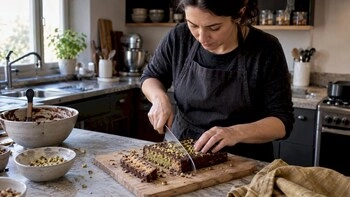
You do not need specialist equipment to get close to the original texture. The components are simple: good chocolate, a stable pistachio-tahini filling, and a crunchy element.
The filling is where most home attempts go wrong. If your pistachio paste is too oily, the mixture weeps and softens the chocolate shell around it. A slightly drier paste, or a small amount of powdered sugar worked through the filling, keeps everything stable without dulling the pistachio flavour.
Pro Tip: Chill your chocolate shell fully before adding the filling, otherwise the warmth of the paste will soften the chocolate from the inside and the bar will lose its snap.
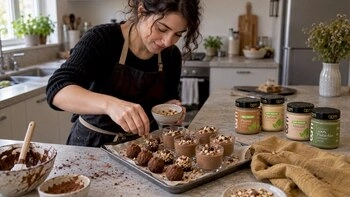
If you want a simpler project before committing to full bars, truffles rolled in crushed pistachio and cocoa are a faster way to taste the same flavour pairing, and they freeze well for up to a month if wrapped tightly.
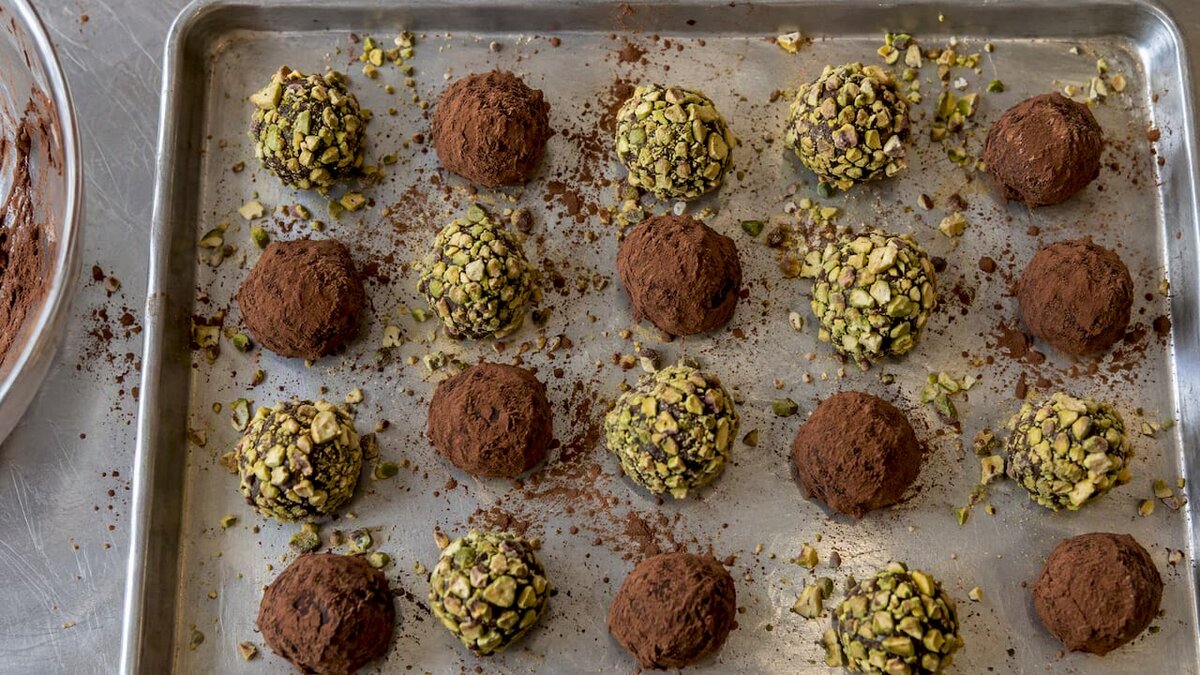
The pistachio-tahini-kataifi profile has moved well past the single bar format. Truffles, filled bonbons, layered cakes, and even pistachio-chocolate drinks have picked up the same flavour signature, usually simplifying the construction while keeping the core taste.
Flavours that work well alongside pistachio in this context:
Because the filling is naturally rich, smaller portions tend to work better than large bars, and pairing a thin slice with an espresso or a citrus-forward drink balances the sweetness more effectively than eating it on its own.
Ingredient quality is doing more work in this trend than the viral packaging suggests. A bar built on real pistachio paste and genuine tahini tastes distinctly different from one using flavoured pastes, and that gap becomes obvious the moment someone bites into a cheaper imitation.
For anyone producing at scale, the lesson is less about chasing virality and more about ingredient sourcing discipline. Decide early whether a product will use full pistachio content or a blend, price it honestly for that choice, and keep portion sizes realistic given current pistachio costs. Retailers who tried to copy the format quickly, without matching ingredient quality, often ended up with a product that photographed well but did not hold up on taste, which is a weaker position long term than a smaller run done properly.
— Andraz
Pistachios bring genuine nutritional value to the format: they carry protein, fibre, and unsaturated fats, which is part of why the nut has a reputation as one of the more balanced options among tree nuts. Tahini, made from sesame seeds, adds further unsaturated fat along with calcium and iron.
That said, a Dubai-style bar is still a dessert built around chocolate and a sweetened pistachio-tahini filling, so the nutritional profile sits closer to confectionery than to a health food, regardless of the pistachio content. The crisp kataifi layer adds carbohydrate from the pastry itself, and the chocolate shell contributes sugar and fat depending on the type used.
The more useful way to think about it is relative: a bar made with genuine pistachio paste and a higher cocoa percentage chocolate will generally offer a different nutritional balance than one made with pistachio-flavoured compound coatings and lower-cocoa chocolate, even though both might be marketed under the same trend name. Reading the ingredient list, rather than the packaging claims, is the clearest way to judge what you are actually eating.
The audience for this trend extends well past people who saw a viral video. Home bakers interested in replicating restaurant-level textures, gift buyers looking for something distinctive rather than a standard chocolate box, and chocolate enthusiasts who already follow flavour trends have all contributed to sustained demand.
Part of the appeal beyond novelty is genuinely sensory: the crunch-against-cream contrast is unusual in mainstream chocolate, which is normally smooth throughout. That texture difference gives the format staying power that a purely visual trend would not have, because it rewards eating the product, not just filming it.
There is also a gifting angle. A pistachio chocolate bar, whether bought or homemade, reads as more considered than a standard supermarket box, which has made it a popular choice for people seeking a gift with a story attached rather than a generic sweet.
Building a Dubai-style bar at home comes down to three things: chocolate that tempers and snaps cleanly, a pistachio-forward filling base, and the right tools to shape and finish it. Our BAM Chocolate range gives you a couverture suited to a crisp shell, and our 100% BAM Spreads line includes nut-based spreads you can work into a pistachio-tahini filling without hunting down separate pastes.
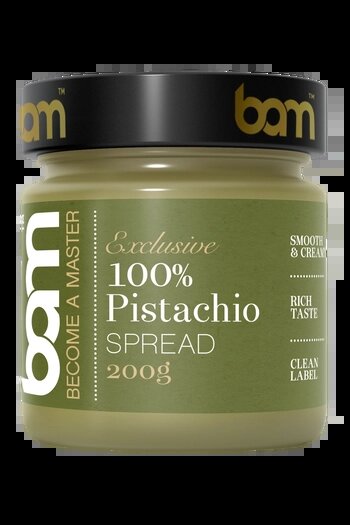
For the moulds, tempering tools and packaging to finish and gift your bars, our baking accessories range covers what a home kitchen typically lacks. If you would rather start from a curated set than build your own shopping list, our BAMBox™ brings together a selection of ingredients and extras in one order, ready to work from the first attempt.
Pistachio chocolate’s popularity comes from a combination of highly shareable short-form video content and a textural contrast, crunchy kataifi against a smooth pistachio-tahini filling, that is unusual in mainstream chocolate. Scarcity around the original bar also fed demand, since limited availability tends to generate more social content than a widely stocked product.
The trending product is commonly known as Dubai chocolate, a bar filled with chopped kataifi pastry and a pistachio-tahini cream inside a chocolate shell, as described in the Wikipedia entry on Dubai chocolate. The format originated with the FIX brand in Dubai before spreading to supermarket versions elsewhere.
The trend started with a bar created by the FIX brand, inspired by knafeh pastry, as described in an interview with co-founder Sarah Hamouda. Limited availability and a £15 price point, reported by the BBC, helped drive viral demand and a wave of supermarket imitations.
Pistachio prices have risen sharply, reaching roughly $4.57 per pound (about €9.40 per kilogram) in April 2026 according to commodity price analysis, largely due to export and logistics disruptions. That makes full pistachio content noticeably more expensive than it was before the trend began, which is why some producers now use blends or substitutes.
Yes. If kataifi pastry is not available, crisped shredded wheat or a similar dry pastry can stand in for the crunchy element, a substitution used in home recipe testing such as the Taste truffle recipe. The flavour and texture contrast still comes through, even if it is not an exact match for the original.


 Confectionery tips



 Slovenščina
 Hrvatski
 Deutsch
 Italiano
 Česky
 Polski
 Magyar
 Français
 Slovák
 Nederlands
 Español