 info@bamchocolate.com
 Login


 en

 BAM Cake converter
 Login
Claudia
Avtorica vsebin


 Reading time:
8 minutes
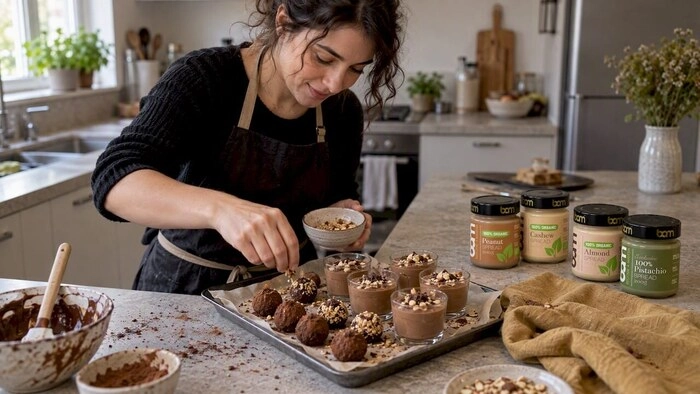
Make hazelnut spread desserts at home, from chilled truffles to baked bars and mug cake, with practical tips on texture, storage, and allergens.
Yes, a jar of hazelnut spread is enough to make a range of indulgent desserts, from no-bake mousses to baked bars and single-serve mug cakes. Below, we group recipe ideas by technique: no-bake, baked and single-jar, with practical tips on temperature, storage and allergen labelling drawn from professional gianduja practice.
No-bake desserts turn a jar of hazelnut spread into dessert in minutes, since the spread itself works as a binder, filling and glaze. Hazelnut spread acts as a filling, swirl and drizzle, and it swaps 1:1 for peanut butter in most no-bake recipes.
Pro Tip: Warm the jar slightly before using it as a drizzle; chill it before using it as a filling, since temperature alone changes how the spread behaves.
Baking with hazelnut spread calls for a few adjustments, since the spread’s fat content makes it looser than butter once it hits oven heat.
Because the spread carries more oil than cocoa powder or flour, recipes built around it often need a touch less added fat or a splash more flour to keep the texture from turning greasy.
A single jar covers plenty of small, fast desserts, which suits anyone cooking for one or two or chasing a late-night craving.
These scale easily. One generous tablespoon per portion is typically enough for a filling or topping without tipping a dessert into overly rich territory.
Hazelnut spread performs differently depending on temperature, and knowing when to warm it and when to chill it solves most texture problems before they happen.
Pro Tip: If a filling feels too soft to pipe, chill the bowl and the piping bag for ten minutes before trying again.
Simple hazelnut spread desserts gain a lot from a few contrasting elements on the plate.
Keep an unopened or resealed jar of hazelnut spread in a cool, dark spot, ideally around 18 to 20°C, rather than the fridge, since room temperature keeps it spreadable.
Hazelnuts are a declared allergen under EU Regulation 1169/2011, which means anyone serving these desserts to guests or the public needs to flag hazelnuts clearly on a menu or label.
Gianduja practice treats texture as something we control, not something fixed in the jar. Classic gianduja methods balance hazelnut paste, chocolate and sometimes cocoa butter, and the same logic helps when adapting a commercial spread for pastry fillings or firmer truffles. For recipes where flavour needs to carry the dessert on its own, a chocolate base built from BAM Chocolate gives a cleaner cocoa note than many standard baking bars, which matters once a spread is diluted into batter or cream.
A typical serving of hazelnut spread sits firmly in the indulgent category, with sugar and fat making up most of its weight. We cannot cite exact calorie or sugar figures for every brand on the market, since these vary jar to jar and are printed on each product’s own label, so checking the pack in front of you remains the most reliable step.
Most commercial hazelnut spreads are not suitable for strict vegan diets, since many contain milk powder or skimmed milk as a standard ingredient. Readers following a plant-based diet should check the ingredient list for dairy before buying, or look for a spread specifically labelled vegan.
Gluten is less of a concern in the spread itself, since hazelnut, sugar, cocoa and oil formulations are typically gluten-free, though cross-contamination during manufacturing can still be a factor for coeliac readers. The desserts built around the spread are a different story. A biscuit base, a stuffed cookie or a brownie carries flour, so the dessert as a whole depends on the other ingredients chosen, not the spread alone. Swapping in a gluten-free biscuit or flour blend keeps the same recipes workable without changing the hazelnut spread component at all.
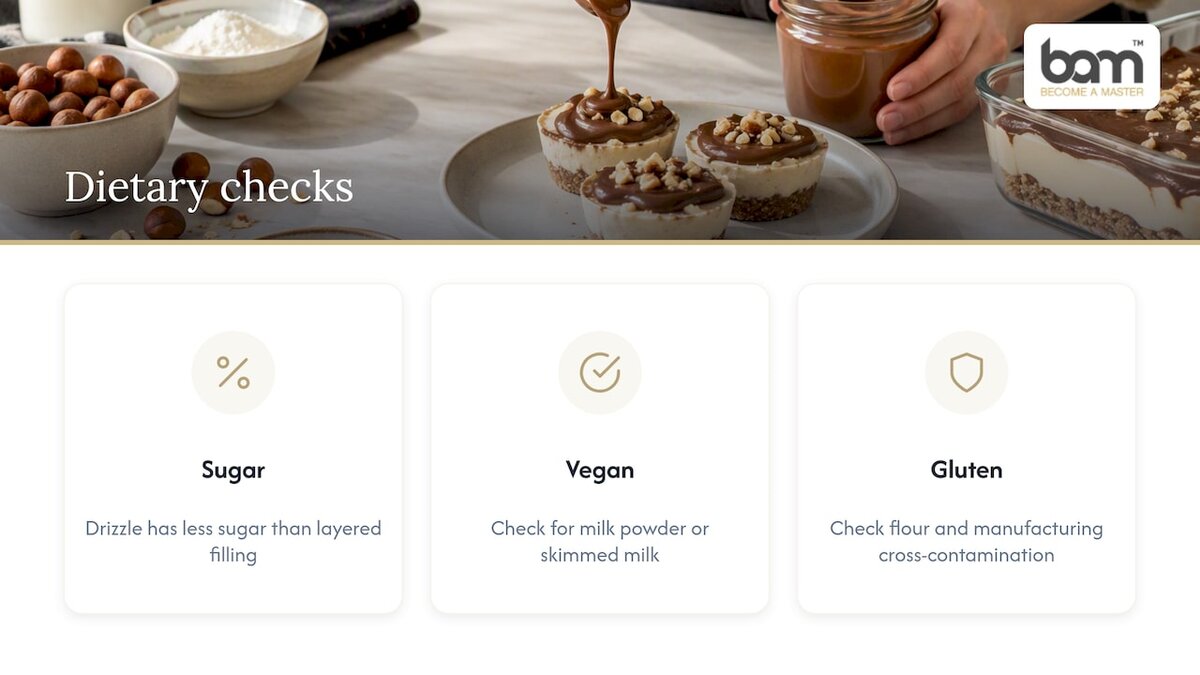
For anyone managing sugar intake, portion size matters more than any single tweak, since a tablespoon used as a drizzle carries far less sugar than a dessert built from several layers of filling.
My favourite trick is freezing small discs of spread before folding them into cookie dough. It takes two minutes of extra prep and solves the one problem that ruins most hazelnut-stuffed bakes: filling that bleeds out before the dough sets. We would love to see what you make, so share your results with the wider baking community whenever you try one of these.
— Andraz
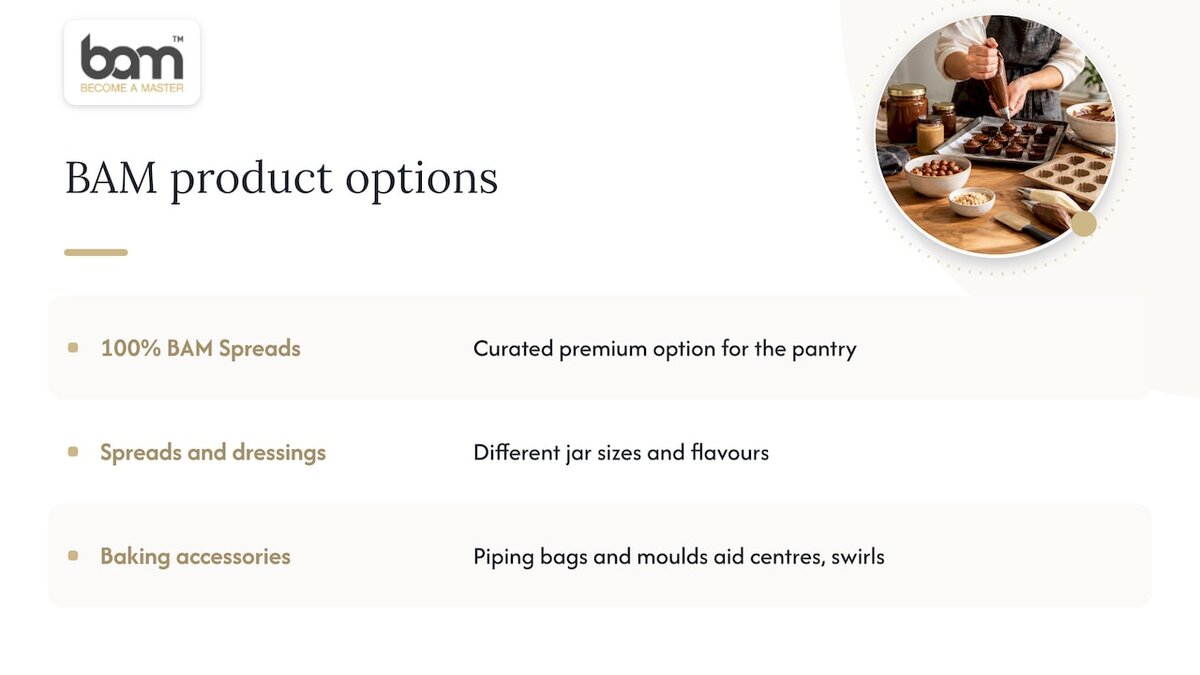
For recipes that lean on the spread’s flavour rather than hide it, 100% BAM Spreads gives a curated, premium option worth keeping in the pantry alongside your usual jar. Our wider spreads and dressings range covers different jar sizes and flavours for whichever recipe you are building, and our baking accessories selection covers the piping bags and silicone moulds that make molten centres and clean swirls easier to pull off. Browse the range and pick out what suits your next bake.
Hazelnut spread works on toast, pancakes, crepes, waffles and fruit such as banana or pear, and it also works as a filling or swirl inside cookies, brownies and cakes. Warming it slightly turns it into a drizzle for ice cream or desserts, while chilling it firms it up for piping.
Hazelnut cream spread suits both no-bake desserts, such as mousse, truffles and pie fillings, and baked recipes, such as stuffed cookies, swirled brownies and crumb bars. Recipe collections show it working equally well in pastries, puffs and simple entremets.
Nutritional content depends entirely on the specific brand and its ingredient list, since sugar, fat and milk content vary jar to jar. Checking the label on each product remains the only reliable way to compare two spreads, rather than assuming one brand name is automatically healthier than another.
A single jar covers mousse, truffles, no-bake pie, stuffed cookies, swirled brownies, mug cakes and stuffed fruit, among other quick desserts. Hazelnut spread swaps 1:1 for peanut butter in many of these recipes, which makes it easy to adapt an existing peanut butter dessert instead of starting from scratch.



 Confectionery tips




 Slovenščina
 Hrvatski
 Deutsch
 Italiano
 Česky
 Polski
 Magyar
 Français
 Slovák
 Nederlands
 Español