 info@bamchocolate.com
  Login
Login 

 en
en 
 BAM Cake converter
  Login
Login Claudia
Avtorica vsebin


 Reading time:
13 minutes
Reading time:
13 minutes 
Discover how to choose quality cocoa powder for baking. Learn key tips for selecting the right type to elevate your recipes today!
Match natural cocoa with baking soda; reach for Dutch-processed when your recipe calls for baking powder or when you want a darker, fudgier result. That single rule prevents most cocoa-related baking failures. Before you open any tin, run three quick checks:
Bamchocolate stocks clearly labelled cocoa powders with fat, origin, and alkalisation details stated on the pack, which removes much of the guesswork for UK home bakers.
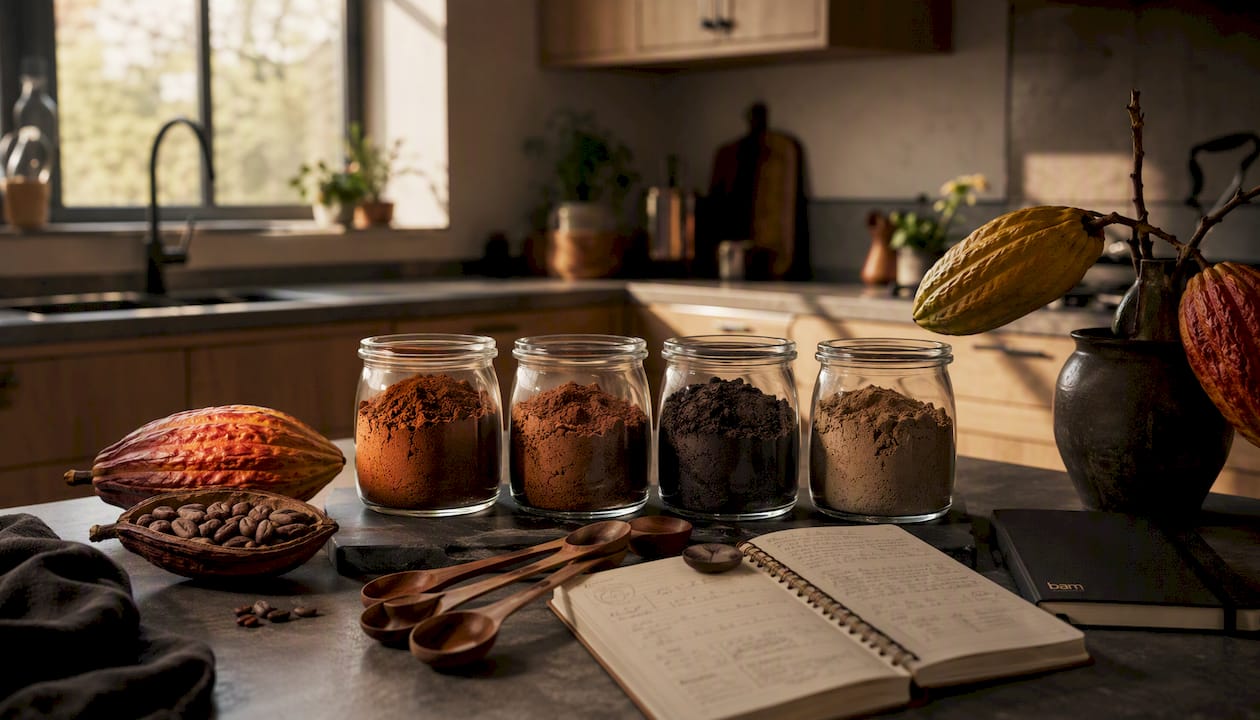
Cocoa powder falls into four practical categories. Knowing which one you have changes how a recipe behaves.
| Type | pH / Acidity | Typical Fat | Flavour & Colour | Best For |
|---|---|---|---|---|
| Natural (unsweetened) | ~5.0–6.0 (acidic) | 10–12% | Fruity, sharp, light brown | American-style cakes, cookies, baking-soda recipes |
| Dutch-processed (alkalised) | ~6.8–8.5 (neutral/alkaline) | 10–22% | Smooth, mellow, dark brown | Fudge brownies, ganaches, baking-powder recipes |
| Black (ultra-alkalised) | 6.8–8.5 (strongly alkaline) | Low | Intense, almost bitter, near-black | Dramatic colour in Oreo-style bakes, icings |
| Cacao (raw) | 5.0–6.0 (mildly acidic) | 10–20% | Complex, slightly bitter, mid-brown | Raw desserts, smoothies, nutrient-focused uses |
Natural cocoa is the default in traditional American recipes. Its acidity reacts with baking soda to produce lift, and its fruitier, sharper flavour gives classic chocolate cake its characteristic tang.
Dutch-processed has been treated with an alkalising agent to neutralise acidity. The result is a darker, smoother powder that dissolves more readily in liquids and produces a deeper colour in bakes. Use it wherever a recipe specifies baking powder as the sole leavener, or in no-bake applications such as chocolate sauces and custards.
Black cocoa is Dutch-processed taken further. A small amount of black cocoa relative to the total cocoa in a recipe adds dramatic colour without drying the crumb excessively. At full concentration it can make a cake dry and dense, so blend it with standard Dutch-processed powder.
Raw cacao powder is cold-pressed rather than roasted, which preserves more polyphenols but also changes the flavour profile. It is not always a 1:1 substitute in baked recipes because its moisture absorption and bitterness differ from roasted cocoa.
Hot chocolate mixes and drinking chocolate are none of the above. They contain added sugar, milk solids and stabilisers that disrupt recipe structure. Never use them as a baking cocoa substitute.
Pro Tip: Blend natural and Dutch-processed in a 50:50 ratio when you want balanced acidity, deeper colour and moderate lift. This works well in layer cakes where both rise and colour matter.
The most common reason a chocolate cake falls flat or tastes off is a leavener mismatch. Natural cocoa is acidic and reacts with baking soda (sodium bicarbonate) to release carbon dioxide and create rise. Dutch-processed cocoa has had that acidity neutralised, so baking soda finds nothing to react with.
| Cocoa type | pH range | Correct leavener |
|---|---|---|
| Natural (unsweetened) | 5.0–6.0 | Baking soda |
| Dutch-processed (alkalised) | 6.8–8.5 | Baking powder |
| Black (ultra-alkalised) | 6.8+ | Baking powder |
Practical failures from getting this wrong:
For a deeper look at leavener behaviour and how baking soda and baking powder differ in practice, Bamchocolate’s guide covers the chemistry clearly.
Fat content is the second variable. Higher residual cocoa butter (around 20–22% in high-fat powders) keeps moisture in the crumb and produces a fudgier texture. Standard grocery powders at 10–12% fat can make bakes drier if you do not compensate by increasing butter or oil slightly. For ganaches and chocolate custards, a high-fat powder makes a visible difference to body and gloss.
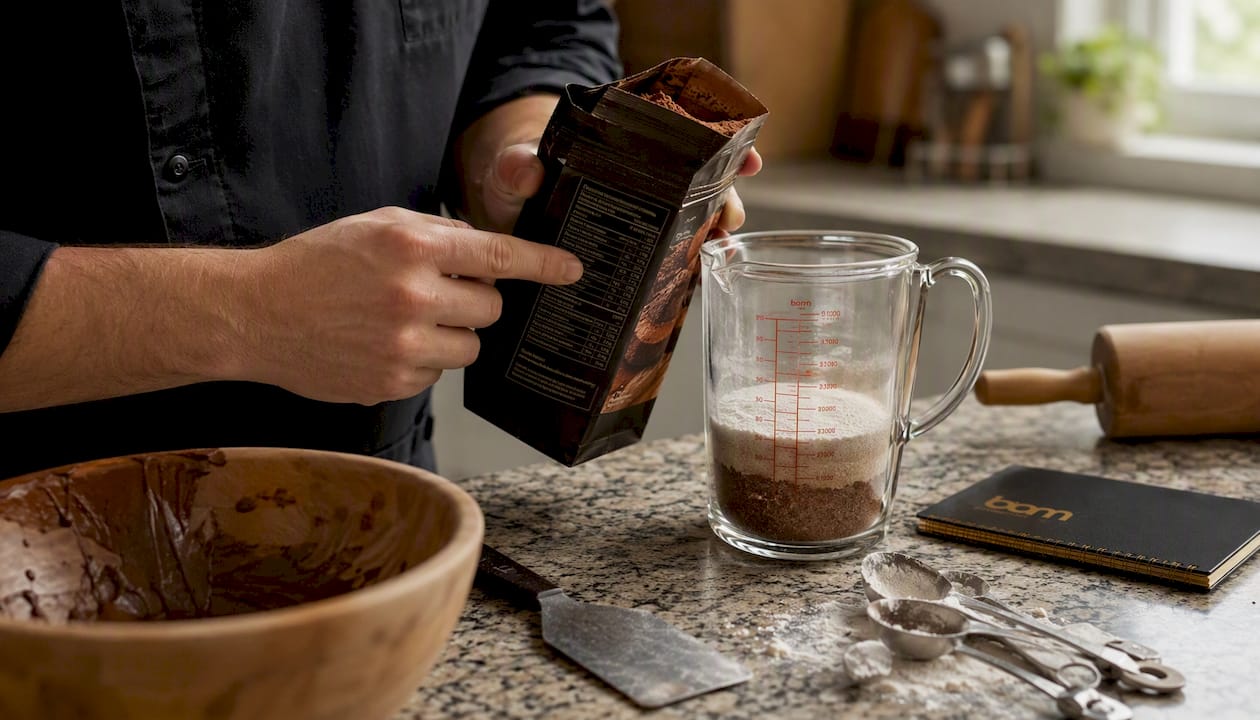
An immediate, intense chocolate aroma is the single most reliable quality signal. A flat, musty or chemical smell indicates processing or storage problems, and no amount of premium-origin marketing changes that.
Sensory red flags to reject:
Label checks that matter:
For a broader look at identifying cocoa quality through sensory markers, Bamchocolate’s guide to dark chocolate applies the same principles.
Pro Tip: Stir half a teaspoon of cocoa into 100 ml of warm water (around 60°C). Premium, finely milled powder disperses evenly in 10–15 seconds with no floating particles. Clumping or a ring of undissolved powder around the edge suggests coarse milling or moisture damage.
Standard commercial cocoa powders retain roughly 10–12% cocoa butter after pressing; high-fat powders retain around 20–22%. That difference shows up directly in mouthfeel, dispersion and the richness of the finished bake.
Practical effects by fat band:
When the packet does not state a cocoa butter percentage, use the nutrition panel. Check fat per 100 g: a figure around 10–13 g per 100 g indicates a standard powder; 20 g or above suggests a high-fat product.
If you are using a low-fat powder in a ganache or brownie recipe designed for a high-fat one, add an extra teaspoon of butter per 30 g of cocoa to compensate for the missing fat.
Pro Tip: When fat data is absent from the label, a darker, reddish-brown Dutch-processed powder generally indicates higher residual fat and better mouthfeel than a pale, chalky-looking tin. Colour is not a guarantee, but it is a useful proxy when you are shopping in a hurry.
Never use hot chocolate or drinking chocolate mixes as a 1:1 baking substitute. They contain sugars and milk solids that alter sweetness, structure and browning in ways that are difficult to correct mid-recipe.
Standard emergency swap: 3 tablespoons of cocoa powder equals 1 oz (28 g) of unsweetened baking chocolate. Reduce the recipe’s fat by 1 tablespoon to compensate for the cocoa butter already present in solid chocolate.
Common pitfalls:
For broader substitution guidance when choosing chocolate for baking, the same principles of fat, acidity and sweetness apply.
Keep cocoa powder in an airtight container in a cool, dry cupboard away from heat sources and strong odours. The fridge is not ideal: condensation introduces moisture, which causes clumping and accelerates degradation.
Shelf-life expectations for UK pantries:
Signs the powder has degraded:
Practical storage habits: transfer from the retail tin to a glass jar with a tight-fitting lid, label it with the opening date, and store it away from the hob, oven or any spice rack that gets warm. Cocoa readily absorbs surrounding odours, so keep it away from coffee, spices and cleaning products.
Specialist online bakers’ suppliers, artisan grocers and the premium sections of larger supermarkets are the most reliable starting points. Everyday supermarket own-brand tins are adequate for background chocolate flavour; they are rarely labelled for fat content or origin.
Label clues to look for:
Rough UK price bands:
Bamchocolate stocks labelled cocoa powders with fat content, alkalisation status and origin clearly noted, including a 500 g standard cocoa powder and a black cocoa powder for dramatic colour applications. For bakers interested in why organic sourcing affects flavour and traceability, Bamchocolate’s guide covers the certification landscape in detail.
Three quick tests give immediate, practical evidence of quality before you commit the ingredient to a recipe.
Step-by-step:
Quick checklist (save to your phone):
Pro Tip: Sift cocoa directly before adding it to a batter — residual fats form microscopic clumps that create dry, bitter pockets when wet ingredients hit them. Ten seconds of sieving prevents that entirely.
Selecting high-quality cocoa powder comes down to three non-negotiable checks: match the type to your leavener, verify fat content on the nutrition panel, and run a quick sensory test before you bake.
| Point | Details |
|---|---|
| Match cocoa type to leavener | Natural cocoa (pH 5.0–6.0) needs baking soda; Dutch-processed (pH 6.8–8.5) needs baking powder. |
| Check fat content | Standard powders carry 10–12% cocoa butter; high-fat powders carry 20–22%, giving richer mouthfeel. |
| Run a sensory test | Strong immediate aroma and clean dispersion in warm water within 15 seconds indicate quality milling and storage. |
| Read the ingredient list | Single ingredient only — “cocoa powder.” Any added sugar, milk solids or starch means it is not baking cocoa. |
| Bamchocolate for labelled powders | Bamchocolate stocks cocoa with fat, origin and alkalisation details stated, removing guesswork for UK bakers. |
Most buying guides focus on brand names. The more useful question is whether the label tells you what you actually need to know before you bake.
Fat percentage and alkalisation status are the two figures that change a recipe’s outcome most directly. A tin that lists neither forces you to guess, and guessing with cocoa is how you end up with a flat cake or a ganache that splits. The acidity in natural cocoa is not a flaw to be corrected by always defaulting to Dutch-processed. Bakers who learn to work with that acidity, pairing it with complementary flavours and the right leavener, get more complexity and character from their bakes than those who always reach for the smoother, more neutral option.
The craft chocolate world has understood this for years. Roasting and fermentation decisions shape cocoa flavour at origin, long before the powder reaches your kitchen. A single-origin powder from a well-fermented bean will have a flavour profile no amount of alkalisation can replicate. That is worth paying for when chocolate is the centrepiece of a recipe, not a background note.
The practical upshot: buy the cheapest tin you can find for dusting a cake tin. Buy the most informative label you can find for anything where chocolate is the point.
Bamchocolate takes the label-reading work out of the process. Every cocoa powder in the range carries clear fat, alkalisation and origin information, so you can match the product to the recipe without guesswork.
The BAM Basic Pastry Package is a practical starting point for home bakers who want a curated set of quality ingredients in one order. For bakers focused on ganaches, custards and fillings, the BAM Confectionery Set Creamy Fillings pairs high-fat cocoa with the other ingredients those recipes need. Baking accessories, including gloves and aprons, are available through the baking accessories category for a complete kitchen setup.
Browse the full range at bamchocolate.com and check the product pages for fat percentage, alkalisation status and origin details before you order.
Further reading for bakers who want to verify or explore the chemistry and sourcing guidance in this article:
Open the tin and smell it immediately. High-quality cocoa has a strong, clean chocolate aroma; a flat, musty or chemical smell indicates processing or storage problems. A warm-water dispersion test (half a teaspoon in 100 ml at 60°C) should clear evenly within 15 seconds.
Yes. Fat content (10–12% standard vs 20–22% high-fat) and alkalisation status directly affect mouthfeel, colour and how the powder interacts with leaveners. Single-ingredient labelling and origin traceability are reliable markers of a more carefully produced product.
The best choice depends on the recipe. Natural cocoa suits baking-soda recipes and American-style cakes; Dutch-processed works better for fudgy brownies, ganaches and baking-powder recipes. Bamchocolate stocks both types with fat content and alkalisation clearly labelled.
No. Hot chocolate mixes contain added sugar, milk solids and stabilisers that disrupt recipe structure and sweetness. The standard emergency swap is 3 tablespoons of cocoa powder for every 1 oz (28 g) of unsweetened baking chocolate, reducing the recipe fat by 1 tablespoon.
Dutch-processed (or alkalised) cocoa has been treated with an alkalising agent to neutralise its natural acidity, raising the pH to roughly 6.8–8.5. This produces a darker colour, smoother flavour and a powder that pairs with baking powder rather than baking soda.



 Confectionery tips


 Slovenščina
 Hrvatski
 Deutsch
 Italiano
 Česky
Česky
 Polski
 Magyar
 Français
 Slovák
 Nederlands
 Español