 info@bamchocolate.com
  Login
Login 

 en
en 
 BAM Cake converter
  Login
Login Claudia
Avtorica vsebin


 Reading time:
9 minutes
Reading time:
9 minutes 
Unlock the secrets to baking with dark chocolate. From melting tips to choosing the right type, elevate your desserts effortlessly!
Couverture melts more fluidly and sets firmer thanks to its higher cocoa-butter content, making it the right pick for glazes, ganache, and drips.
Key temperatures to keep in mind when working with dark chocolate:
BAM Zartbitterschokolade is a ready option for UK home bakers, available in 500 g and 1 kg packs suited to everything from a single batch of brownies to regular ganache work.
Pro Tip: Keep a digital probe thermometer next to your hob. Guessing temperatures is the single most common reason home-baked glazes turn dull or streaky.
| Point | Details |
|---|---|
| Choose the right type | Use couverture for glazes and drips; use 60–75% table chocolate for batters and ganache. |
| Temper at correct temperatures | Melt to 45–50 °C, cool to 28–29 °C, then work at 31–32 °C for a glossy, stable finish. |
| Match ganache ratios to use | 1:1 for pouring, 2:1 for spreading, 3:1 for firm truffle centres (chocolate to cream by weight). |
| Chill flourless recipes fully | Flourless tarts need at least three hours of refrigeration to set and slice cleanly. |
| Bamchocolate for UK bakers | BAM Zartbitterschokolade (500 g or 1 kg) and the Basic pastry package cover most home-baking needs. |
Not all dark chocolate behaves the same way in the oven or over a bain-marie. Understanding the differences saves you from a sticky, grainy mess.
Couverture (kuvertüre) contains a higher percentage of cocoa butter than standard chocolate, which is why it melts into a fluid, glossy liquid and sets with a firm snap. Couverture is specifically designed for glazes and coatings precisely because of this property. Use it whenever the final appearance matters: mirror glazes, drip cakes, moulded bonbons.
Standard dark table chocolate (Tafelschokolade) has less cocoa butter but still performs well when chopped into batters, melted for ganache, or used as mix-ins.
Cooking chocolate / Kochschokolade is where many bakers go wrong. Many supermarket cooking chocolates carry a high sugar proportion that makes them sticky rather than fluid when melted, and they rarely produce a glossy finish.
Cocoa powder delivers intense colour and deep flavour with less fat. It suits dry batters, dusting, and recipes where you want colour without adding extra fat. For guidance on choosing quality cocoa powder, look for Dutch-processed options with no added sugar.
When shopping, check the ingredient list. Cocoa butter should appear before any vegetable fat. If sugar is the first ingredient, put it back.
Tempering is the process of heating and cooling chocolate to stable cocoa-butter crystals, giving you a glossy finish and a clean snap. You only need it for glazes, drips, and moulded pieces. For ganache or batter, melting alone is sufficient.
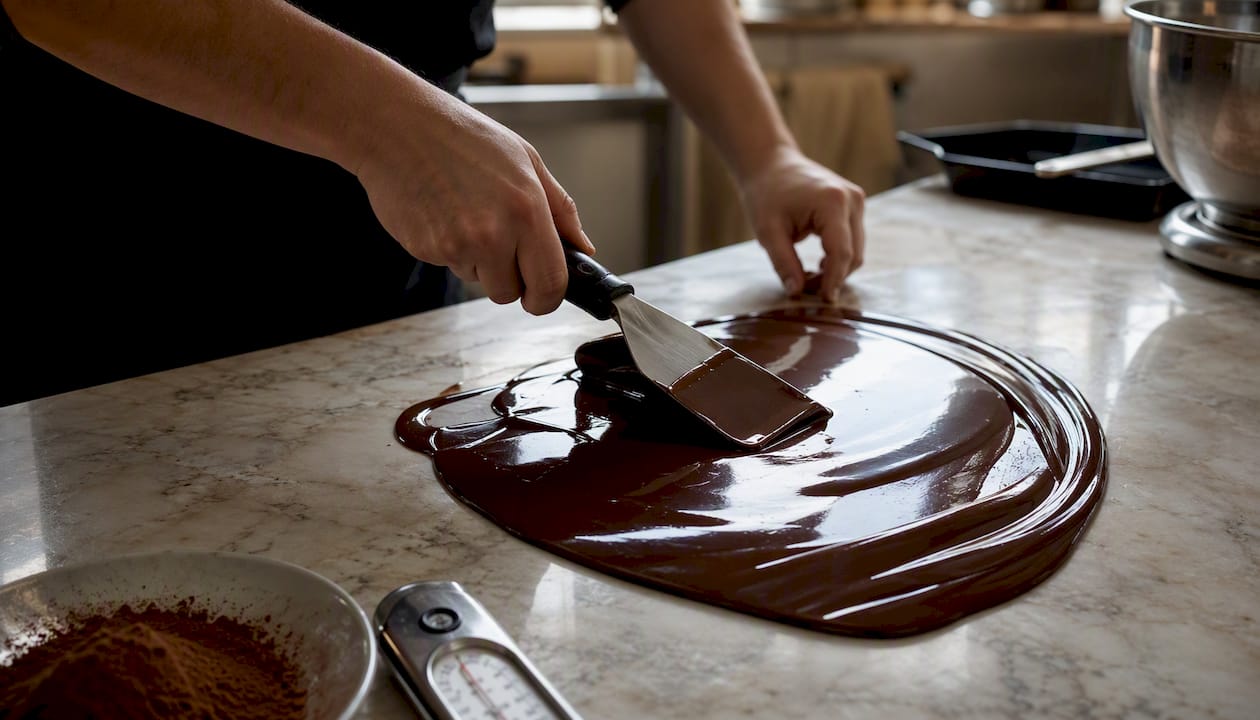
Bain-marie (recommended): Place chopped chocolate in a heatproof bowl over a pan of barely simmering water. The bowl must not touch the water. Stir gently and remove from heat once melted. Keep all utensils bone dry; a single drop of water causes the chocolate to seize.
This method is faster but easier to overheat.
BBC Good Food gives the target temperatures for dark chocolate as: melt to 45–50 °C, cool to 28–29 °C, then reheat to the working range of 31–32 °C.
Dr. Oetker’s seeding guide recommends testing temper by spreading a small amount on a cold surface: properly tempered chocolate sets within two minutes with a matte, even surface and snaps cleanly.
Pro Tip: Humid kitchens tighten tempering tolerances. If your kitchen is warm or steamy, chill your work surface and work quickly once the chocolate hits 31–32 °C. You can also find guidance on tempering without a thermometer if you prefer visual cues.
A small extra portion, melted separately and swirled on top before baking, adds sheen.
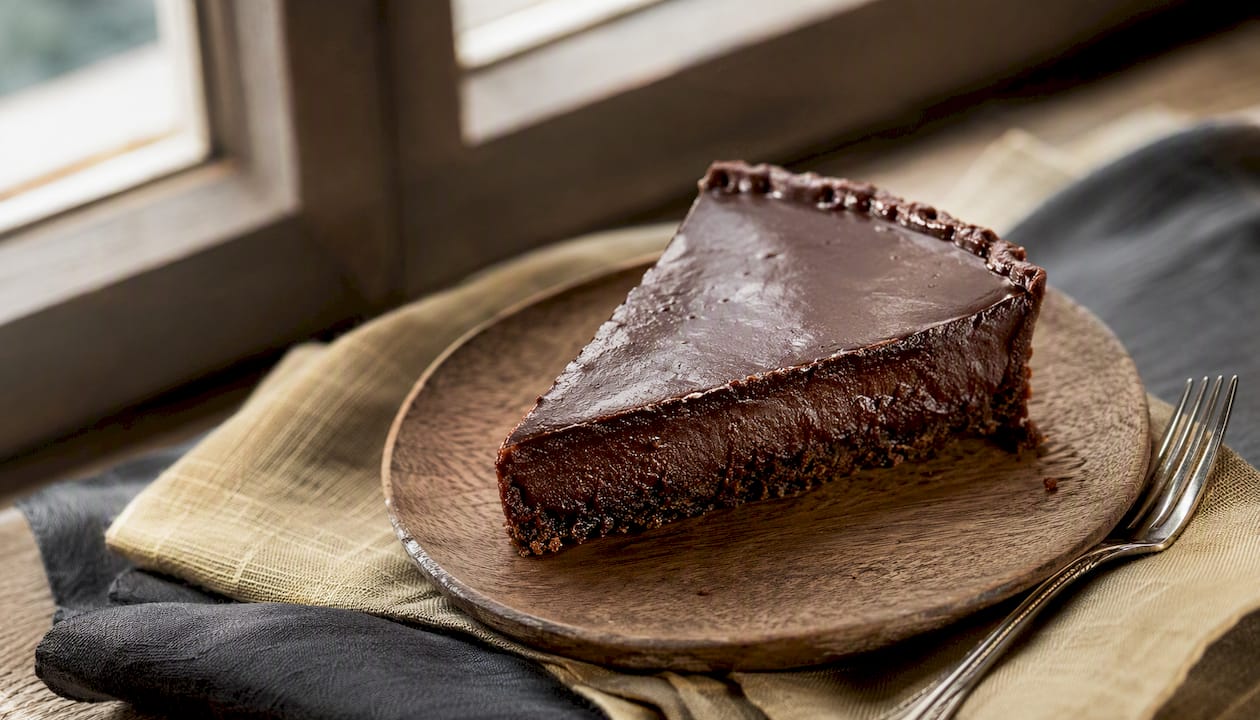
A flourless dark chocolate tart, which uses whipped eggs and yoghurt for structure, needs at least three hours of refrigeration to set properly. Patience at the chilling stage is what separates a clean slice from a collapsed one. For a tested home-baker approach, see this easy chocolate cake recipe on the Bamchocolate site.
| Use | Dark chocolate : cream (by weight) |
|---|---|
| Pouring ganache / drip | 1 : 1 |
| Spreading ganache (filling) | 2 : 1 |
| Firm truffle centre | 3 : 1 |
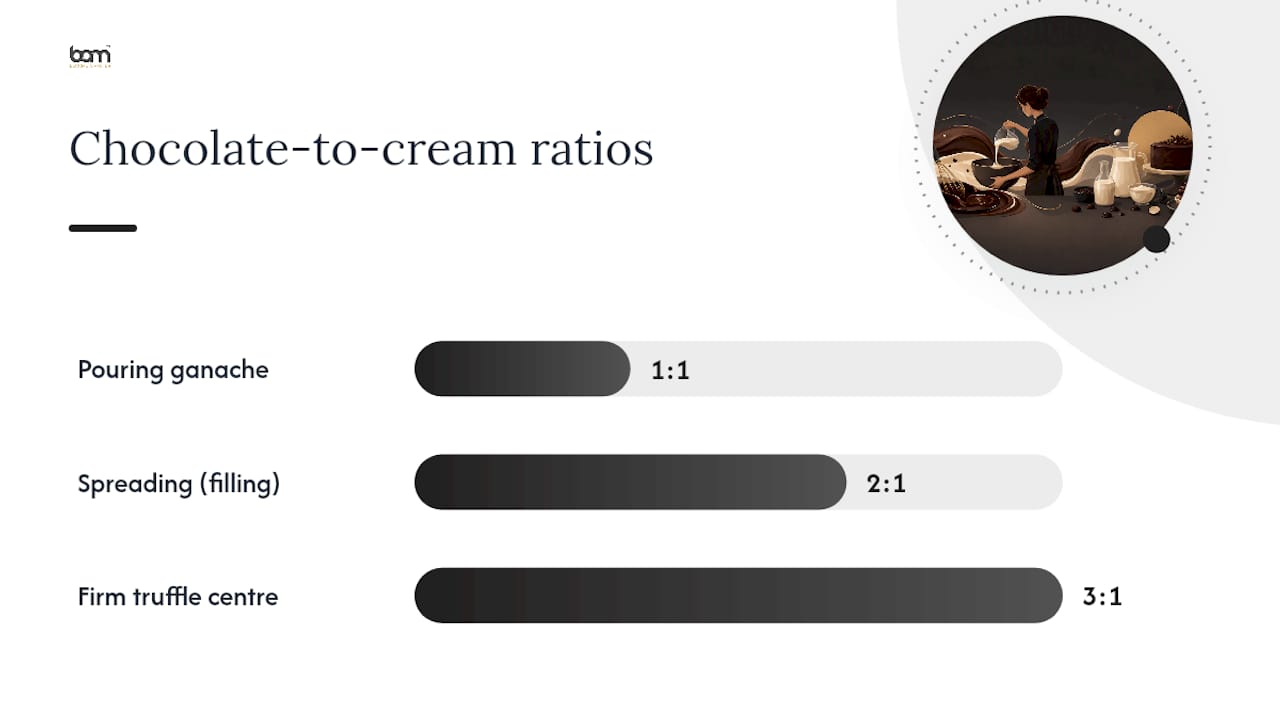
Warm the cream to just below boiling, pour over finely chopped chocolate, and leave for one minute before stirring from the centre outward. For glazes, couverture’s higher cocoa-butter content produces a glossier, faster-setting finish than standard table chocolate.
For decorative shavings or curls, chill the bar briefly before working it with a vegetable peeler. Cold chocolate produces cleaner curls with less smearing.
As a rough guide, replace 30 g of melted dark chocolate with 1 tablespoon of cocoa powder plus 1 teaspoon of fat (butter, coconut oil, or neutral oil) and a small increase in sugar. This works in batters and dry mixes but not for glazes or ganache, where the fat content of solid chocolate is structurally necessary.
For ganache, replace double cream with full-fat coconut cream or a soy-based double cream alternative at the same ratio. The result is slightly less glossy but sets well.
Cocoa and dark chocolate contain caffeine and theobromine. Recipes containing raw or lightly cooked eggs (such as some mousses and unbaked tart fillings) carry a salmonella risk; use pasteurised eggs or a heat-treated alternative for vulnerable groups including pregnant women, the elderly, and young children.
Seizing happens when even a small amount of water contacts melted chocolate, causing it to clump into a stiff paste. To recover: add warm cocoa butter or neutral oil, one teaspoon at a time, and stir over very gentle heat. The chocolate will not be suitable for tempering after this, but it works fine in batters or ganache.
A split ganache looks greasy and separated. Warm it gently to 35–40 °C, then whisk in a splash of hot cream. Graininess usually means the chocolate was overheated or the cream was too cold when added. Strain through a fine sieve and re-emulsify over low heat.
Fat bloom appears as grey-white streaks or patches on the surface; it happens when chocolate is stored at fluctuating temperatures and cocoa butter migrates. Sugar bloom looks dusty and rough; it forms when condensation dissolves surface sugar. Neither affects flavour, but both affect texture and appearance. Store finished chocolate items at 15–18 °C, away from direct light and humidity, and avoid moving them between warm and cold environments rapidly.
Pro Tip: Always use completely dry bowls and spatulas. A quick wipe with kitchen paper is not enough if the bowl has just been washed — let it air-dry fully or warm it briefly in a low oven.
Prevention checklist:
Bamchocolate stocks dark chocolate and accessories suited to the full range of home-baking tasks. Here is a practical breakdown:
For ganache-focused baking, the BAM Confectionery set for creamy fillings bundles specialist ingredients in one order. Browse the full range of baking accessories for thermometers, gloves, and tools.
Pro Tip: Buy couverture for glazing and a good table chocolate for batters. Keeping both in stock means you always have the right tool for the job without over-spending on couverture for every recipe.
Working with dark chocolate rewards precision over speed. The tempering window for dark chocolate is narrow — just a few degrees separates a glossy, snapping glaze from a dull, streaky one. Tarts and mousse-based desserts need genuine chill time; cutting into a flourless tart after one hour rather than three produces a different dessert entirely.
The percentage question is equally practical.
Bamchocolate’s baking-grade dark chocolate is formulated to give consistent results across these techniques, which matters more than most bakers realise until they have worked through a batch with an inconsistent bar.
Bamchocolate supplies UK home bakers with baking-grade dark chocolate and the tools to use it correctly. The BAM Basic pastry package is a practical starting point for occasional bakers: it includes the core chocolate and accessories needed for brownies, ganache, and glazes without over-committing on quantity. Regular bakers will get more value from the BAM Large Confectionery Bundle, which covers multiple baking sessions and reduces reorder frequency.
All products are available for UK delivery. Visit the Bamchocolate shop to check current stock, pack sizes, and full product details.
Yes.
It balances richness and sweetness without making the batter too bitter or too dry.
Dark chocolate is not prohibited during pregnancy, but cocoa contains caffeine. Avoid unbaked recipes containing raw eggs.



 Confectionery tips


 Slovenščina
 Hrvatski
 Deutsch
 Italiano
 Česky
Česky
 Polski
 Magyar
 Français
 Slovák
 Nederlands
 Español