 info@bamchocolate.com
  Login
Login 

 en
en 
 BAM Cake converter
  Login
Login Claudia
Avtorica vsebin


 Reading time:
9 minutes
Reading time:
9 minutes 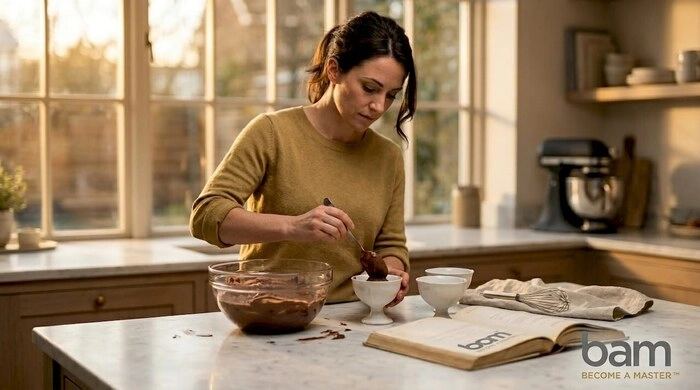
Discover what chocolate mousse really is! Learn its rich history, key ingredients, and tips to create the perfect airy dessert at home.
TL;DR:
- Chocolate mousse is a delicate, airy French dessert made by folding whipped egg whites or cream into melted chocolate, creating a rich yet weightless texture. Its history spans from 17th-century origins to modern variations, emphasizing simple ingredients, precise technique, and quality chocolate for optimal flavor and structure. Proper folding, temperature control, and chilling are essential for achieving the perfect mousse, which is naturally gluten-free with standard ingredients.
Chocolate mousse has a reputation for being a restaurant-only dessert, something that requires professional training or a long list of exotic ingredients. That reputation is wrong. What is chocolate mousse, really? At its core, it is a light, airy French dessert made by folding whipped egg whites or cream into melted chocolate, producing a texture that is simultaneously rich and weightless. This article covers everything you need to know: the history, the ingredients in chocolate mousse, the technique, and the practical tips that separate a good mousse from a great one.
| Point | Details |
|---|---|
| Mousse means foam | The word comes from French, describing the aerated texture that defines the dessert. |
| Chocolate quality matters most | Dark chocolate with at least 70% cocoa solids produces the best flavour and structure. |
| Technique over complexity | Gentle folding and controlled temperatures are more important than a long ingredient list. |
| Food safety is worth considering | Raw egg concerns are real; pasteurised eggs or a cooked base are practical alternatives. |
| Chilling time is non-negotiable | At least two to four hours in the refrigerator is required for the mousse to set properly. |
The word ‘mousse’ means foam in French, and that single word tells you everything about what makes this dessert distinctive. The foam is not decorative. It is structural. Without it, you do not have mousse. You have ganache, or pudding, or custard.
Classic chocolate mousse is defined by its light, creamy texture achieved through whipped egg whites or cream folded into melted chocolate. The result is a dessert that holds its shape when spooned but dissolves almost immediately on the tongue. That contrast is what people mean when they describe what chocolate mousse tastes like: intensely chocolatey but never heavy, rich but never dense.
Here is how mousse differs from similar desserts:
“Perfect mousse balances indulgence and elegance; high-quality chocolate is the most critical factor influencing flavour profile.”
Traditional recipes keep the ingredient list short: dark chocolate, eggs, and sometimes a small amount of sugar or vanilla. Modern variations may include heavy cream, butter, or flavourings such as orange zest or espresso. The core principle does not change regardless of the variation. Air in, air preserved, chocolate flavour forward.
Understanding where chocolate mousse came from helps explain why technique is treated with such seriousness in French culinary tradition. This is not a dessert that appeared overnight.
17th century foundations. Recipes date back to French cookbooks in 1691, though these early preparations were closer to savoury foam dishes than the sweet dessert we know today. French chefs were already experimenting with aerated textures long before chocolate became central to the recipe.
18th and 19th century evolution. Chocolate mousse as a sweet dessert emerged in French cuisine between the late 18th and early 19th centuries, as refined sugar and quality chocolate became more accessible. The shift from savoury to sweet mousse reflected broader changes in French gastronomy during this period.
Early 20th century recognition. The name ‘mousse’ as applied to this specific chocolate dessert first appeared in print in the early 1900s, cementing its place in formal French culinary vocabulary. By this point, the dessert had moved from professional kitchens into home cooking.
Mid-20th century global spread. As French cuisine gained international prestige, chocolate mousse travelled with it. Cookbooks in Britain, the United States, and across Europe began featuring recipes, often adapting the original to local ingredients and preferences.
Modern adaptations. Today, the different types of mousse extend well beyond the classic. Vegan versions use aquafaba (the liquid from tinned chickpeas) in place of egg whites. White chocolate mousse, milk chocolate mousse, and flavoured variations are now standard in professional pastry work. The story of fine chocolate itself has shaped how these modern versions taste and perform.
The through-line across all of this history is simplicity respected. French culinary tradition values restraint, and chocolate mousse is a perfect expression of that value: few ingredients, precise technique, outstanding result.
Getting the ingredients right is where most home cooks either succeed or struggle. The list is short, but each item carries real weight.
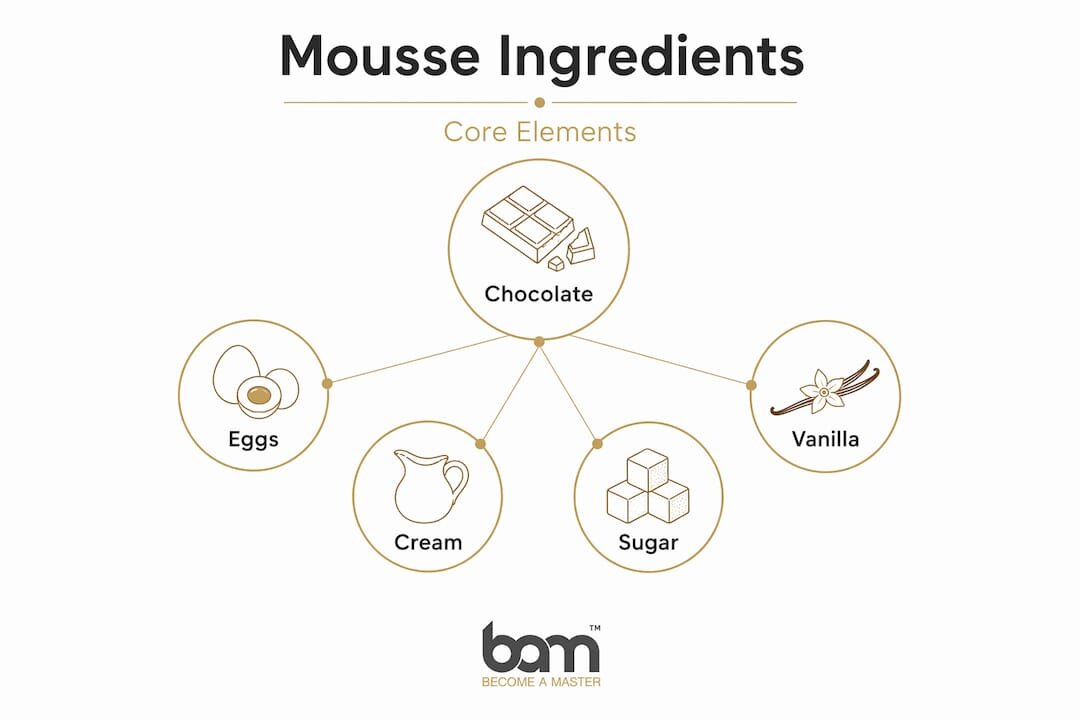
| Ingredient | Role | Notes |
|---|---|---|
| Dark chocolate | Flavour, structure, body | Minimum 70% cocoa solids recommended |
| Egg whites | Aeration, lightness | Raw or pasteurised; whipped to stiff peaks |
| Heavy cream | Richness, alternative aerator | Used in place of or alongside egg whites |
| Sugar | Sweetness, stabilises whites | Small amounts; often optional with sweet chocolate |
| Vanilla extract | Depth of flavour | A few drops only; supports chocolate notes |
| Egg yolks | Emulsification, richness | Used in some traditional recipes |
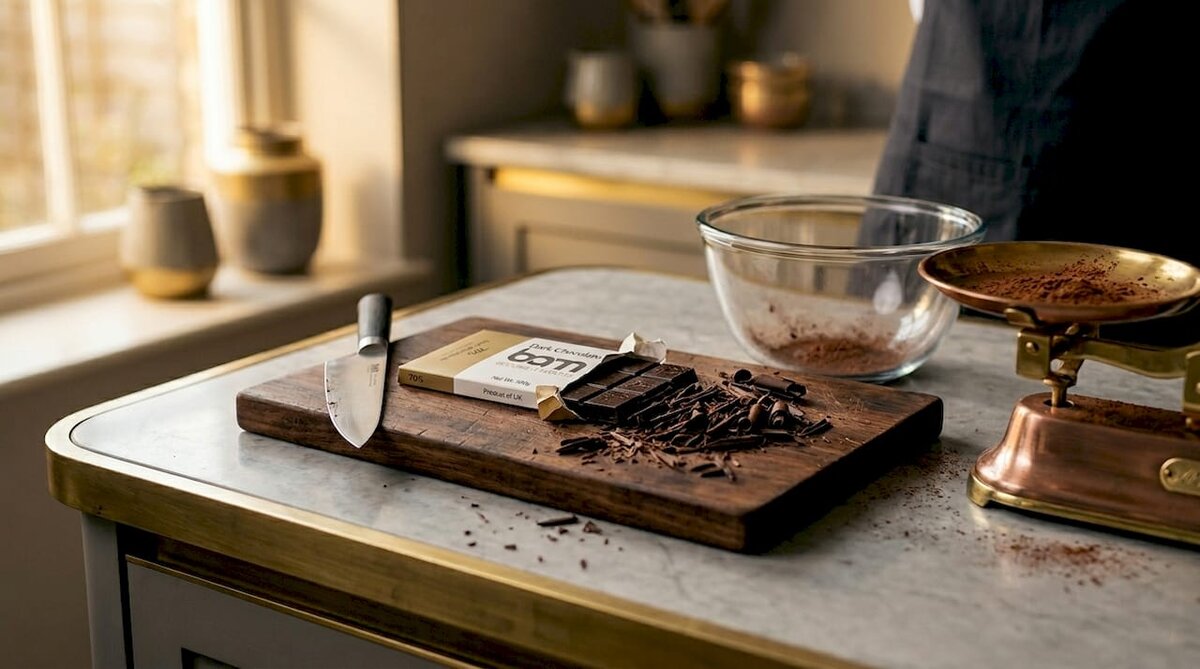
Dark chocolate is the ingredient that most directly determines the final flavour. A minimum of 70% cocoa solids is preferred because it provides the structure and bitterness that balances the sweetness of whipped cream or sugar. Milk chocolate lacks the necessary structure and produces a mousse that is soft and overly sweet. Knowing how to choose good quality chocolate before you start makes a measurable difference in the finished dessert.
Egg whites or cream provide the foam. Egg whites, whipped to stiff peaks, create a lighter, more traditional mousse. Heavy cream, whipped to soft peaks, produces a richer, denser result. Many recipes use both: yolks folded into the chocolate base for richness, whites folded in for lift.
The food safety question around raw eggs is worth taking seriously. Traditional recipes use raw eggs for texture, but safety guidelines recommend pasteurised eggs or a gently cooked base, particularly for children, pregnant women, and older adults. Preparation typically takes 20 to 30 minutes with two to four hours of chilling time required afterwards.
Pro Tip: If you are concerned about raw eggs, warm the yolks gently with a small amount of sugar over a bain-marie until they reach 60°C before combining with the chocolate. This eliminates the safety concern without significantly altering the texture.
Good ingredients can still produce a disappointing mousse if the technique is off. These are the points where most mistakes happen.
Chocolate temperature. Melting chocolate at the correct temperature is fundamental. The chocolate should be warm to the touch, not hot. Too hot and it will cook the eggs when combined; too cool and it will seize into grainy lumps when the cream or egg whites are added.
Whipping speed matters. Whipping egg whites at medium mixer speed produces smaller, more stable bubbles. High speed creates large bubbles that collapse quickly, which means your mousse will lose its structure within hours of setting.
The folding method. Fold egg whites in two to three stages, starting with a small portion to loosen the chocolate base. This first addition is sacrificial. It lightens the dense chocolate mixture so that subsequent additions of egg white do not deflate. Use a silicone spatula and work in wide, gentle arcs from the bottom of the bowl upward.
Chilling time. Do not rush this step. The mousse needs at least two hours in the refrigerator, and four is better. The structure sets as the fats in the chocolate and cream solidify around the air bubbles.
Common mistakes to avoid. Over-mixing destroys the foam. Adding hot chocolate to cold cream causes seizing. Using chocolate below 60% cocoa produces a mousse that will not hold its shape. For a practical walkthrough, the guide on making light, creamy mousse at Bamchocolate covers these points in detail.
Pro Tip: Before folding, check that your chocolate mixture and your whipped egg whites are at a similar temperature. Cold chocolate hitting room-temperature whites is one of the most common causes of a streaky, uneven mousse.
Is chocolate mousse gluten-free? In its classic form, yes. The standard ingredients contain no gluten. Always check any flavourings, cocoa powder, or chocolate bars you use, as some products include additives that contain gluten.
I have made chocolate mousse more times than I can count, and the thing that still surprises me is how unforgiving the folding stage is. You can use the finest chocolate available, source the best eggs, and get the temperatures exactly right, and then lose the whole thing in thirty seconds of careless mixing. That is not a warning meant to put you off. It is the opposite.
What I have found is that once you understand why the folding matters, the technique clicks. You are not just mixing two things together. You are protecting millions of tiny air bubbles that took several minutes of whipping to create. That shift in perspective changes how you hold the spatula.
My other strong opinion: do not start with a recipe that adds too many components. Cream, butter, yolks, whites, ganache base, all at once. Classic chocolate mousse with dark chocolate and egg whites teaches you the fundamentals cleanly. Once you have made it three or four times and you understand how the texture should feel at each stage, then experiment with cream or flavourings.
Modern variations are genuinely good, and I would never argue against experimenting. But the classic version, done well, is still the standard everything else is measured against. Respect that before you move on.
— Andraz
Getting chocolate mousse right starts before you even melt the chocolate. Bamchocolate stocks the baking accessories and premium confectionery ingredients that make a real difference at every stage of preparation. For those building their pastry skills from the ground up, the BAM Basic pastry package brings together the core tools and ingredients in one place. If you want a broader reference for chocolate desserts beyond mousse, the 101 BAM pastry recipe book covers a wide range of preparations with clear, tested guidance. Quality ingredients and the right tools are not extras. They are the starting point.
Classic chocolate mousse contains dark chocolate, egg whites or whipped cream, and a small amount of sugar. Some recipes add egg yolks, vanilla, or butter for additional richness.
Chocolate mousse tastes intensely chocolatey with a light, airy texture that dissolves quickly on the tongue. The flavour is rich but not heavy, and the quality of the chocolate used directly determines the depth of taste.
Classic chocolate mousse contains no gluten in its standard ingredients. Check the labels on any chocolate, cocoa powder, or flavourings used, as some products may contain gluten-based additives.
Preparation takes approximately 20 to 30 minutes, followed by two to four hours of chilling time in the refrigerator before serving.
Mousse is aerated using whipped egg whites or cream, giving it a light foam texture. Pudding is thickened by starch and cooked, producing a smooth but dense consistency without air.



 Confectionery tips



 Slovenščina
 Hrvatski
 Deutsch
 Italiano
 Česky
Česky
 Polski
 Magyar
 Français
 Slovák
 Nederlands
 Español