 info@bamchocolate.com
 Login


 en

 BAM Cake converter
 Login
Claudia
Avtorica vsebin


 Reading time:
10 minutes
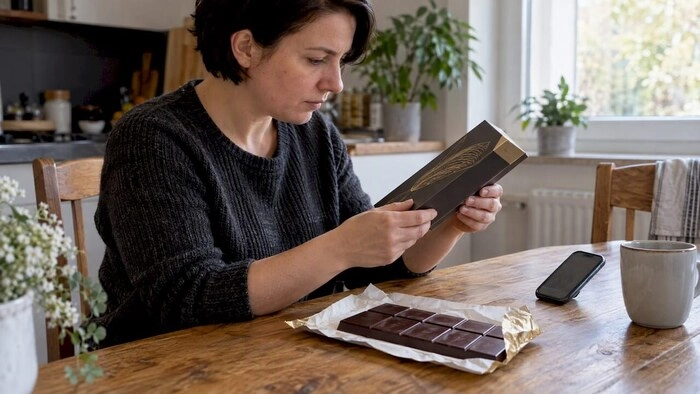
Choose limited edition chocolate by checking couverture, collectible packaging, preorder dates, and authenticity before a sought after release sells out.
Shop curated limited-edition chocolates from a specialist with a clear preorder calendar, and move quickly once a release opens. Limited runs combine unusual flavours with collectible packaging, which makes them stronger gifts than standard bars. Because numbered editions sell out, check release dates and preorder windows before you commit to a specific box.
A limited edition chocolate is produced in a fixed quantity, often tied to a season, a collaboration or a one-off flavour that will not return to the regular range. The signals are usually visible on the packaging itself, not buried in marketing copy.
Quality matters as much as scarcity. Fine limited runs are usually made with couverture chocolate, which uses pure cocoa butter and gives a glossier finish and cleaner melt than compound chocolate, which relies on vegetable fats and is more common in mass-market seasonal sweets because it is easier to mould and more heat-stable.
Limited releases cluster around predictable moments in the calendar, which makes them easier to plan for once you know the pattern.
Retail exclusives tend to sell through a single chain or region, while chocolatier exclusives are usually sold directly by the maker and through a smaller number of specialist shops. Knowing which type you are looking at saves time when a box seems to have vanished from shelves.
Matching the chocolate to the recipient takes a few minutes and avoids an expensive miss.
Pro Tip: Buy one size larger than you think you need for a collectible edition: once the run sells out, there is no second chance to add a bar for a second recipient.
Dietary needs deserve the same attention as flavour. A sugar-free or protein-rich chocolate line can sit comfortably alongside a classic praline gift, provided the labelling confirms it clearly.
Limited runs move fast once they go live, so a little preparation goes a long way.
A preorder slot is usually the safest route to a genuinely limited item, since walk-in stock at retail often disappears within hours of launch.
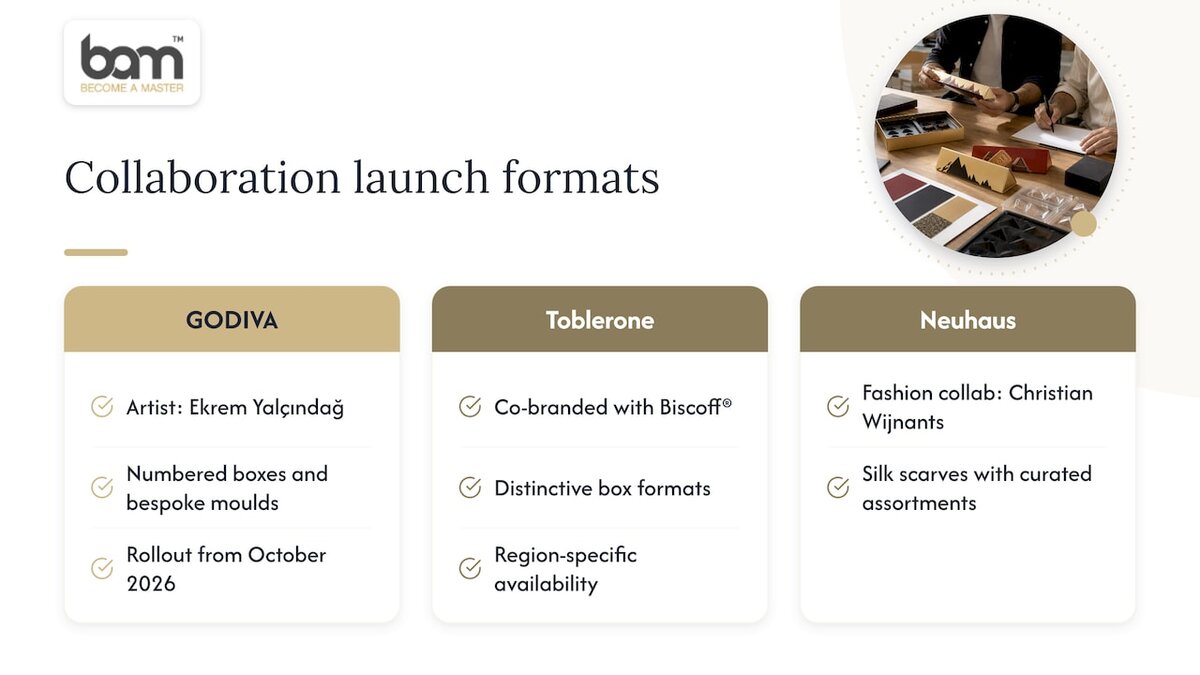
Recent launches show how limited editions are built and marketed. GODIVA’s 2026 Centennial Collection Art Edition, created with artist Ekrem Yalçındağ, used numbered boxes and bespoke moulds with a staggered rollout across markets from October 2026. Mondelēz International took a different route with Toblerone Diamond Truffles with Biscoff®, a co-branded 2026 launch sold in distinctive box formats with region-specific availability. Neuhaus paired chocolate with fashion in its Les Nuances collection with Christian Wijnants, bundling silk scarves with curated assortments.
The pattern across all three launches: numbered or dated editions, physical extras beyond the chocolate itself, and staggered availability by market. Buyers should expect the same mechanics from any high-profile collaboration.
For anyone buying for an allergy-sensitive recipient, EU rules under Regulation (EU) No 1169/2011 require clear allergen labelling on food, with Slovenian implementing guidance enforcing visible allergen notices. A sealed, fully labelled box is the safer choice over an unmarked or loose assortment.
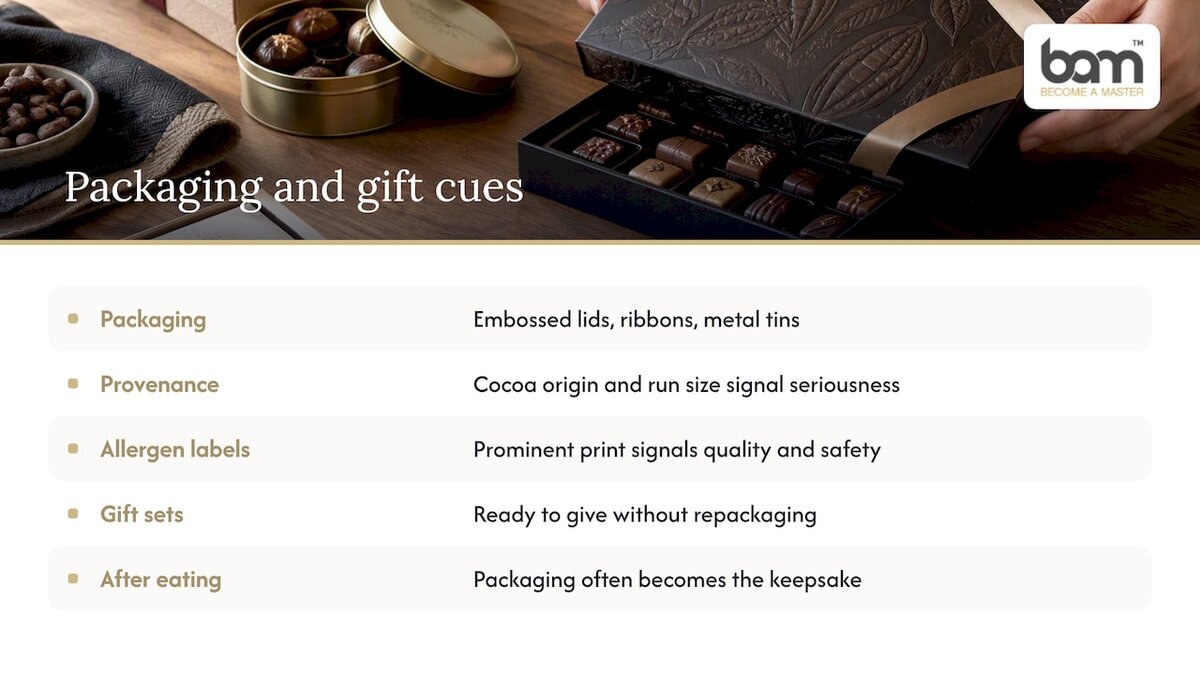
Packaging does more work for a limited edition than for a standard bar. A box that states its edition number, names a collaborator, or includes a physical extra such as a scarf or a printed card signals to the recipient that this is not an everyday purchase.
Collectors and gift buyers read specific cues: embossed lids, ribboned closures, metal tins rather than cardboard, and printed certificates confirming the run size. These details carry weight after the chocolate has been eaten, since the packaging itself often becomes the keepsake.
When choosing between two similar releases, the one with clearer provenance information on the box, including origin of the cocoa and the production run, usually signals a more serious limited edition than one relying purely on festive colours and a “limited” sticker. A genuine collectible also tends to list ingredients and allergens prominently rather than in small print on a fold, which doubles as a quality signal and a safety one.
Presentation-ready gift sets save a step for the buyer too: a box designed to be given as-is, without repackaging, is worth the small premium for anyone buying under time pressure.
Limited editions carry a premium over standard ranges, and that premium reflects more than the chocolate itself. Collaboration fees, bespoke packaging, smaller production runs and included extras such as textiles or certificates all add cost that a mass-produced seasonal bar does not carry.
Value is easiest to judge by separating two questions: what does the chocolate itself cost per gram against a standard couverture bar, and what is the keepsake or collaboration element worth to the recipient. A collector buying for the packaging and provenance is paying for something closer to a limited print than a snack, and the comparison should be made on those terms rather than against supermarket confectionery.
A useful check before buying is whether the price reflects a one-off collaboration (justifiably higher) or simply a festive wrapper on an otherwise standard product (where the premium is harder to defend). Reading the ingredient list and provenance details, covered earlier, helps make that distinction quickly.
A collectible box is only worth keeping if the chocolate inside still tastes right when it is eventually opened. Store it in a cool, dry place, ideally between 15°C and 18°C, away from direct sunlight and strong odours that chocolate absorbs easily.
Avoid the refrigerator unless the room is genuinely warm, since condensation on unwrapping can dull the surface and cause the pale streaking known as bloom. If refrigeration is unavoidable, seal the box in an airtight container first and let it come back to room temperature slowly before opening.
Keep the original packaging intact for as long as possible, both for freshness and because an unopened numbered box retains more of its collectible value. Humidity is the main enemy of texture, so a stable, dry cupboard away from an oven or a window beats a kitchen counter every time.
Authentic limited editions carry specific, checkable details that generic or counterfeit versions tend to skip. A genuine release states an edition number or run size, names the collaborator or designer directly, and matches the packaging shown in the maker’s own announcement rather than a close approximation.
Ingredient lists and allergen declarations should be printed clearly and match EU labelling requirements, since a vague or missing allergen panel is a strong sign of an unofficial or repackaged product. Buying directly from the maker or from a seller who can confirm the sourcing is the most reliable safeguard, particularly for high-profile collaborations where imitation packaging circulates online.
Price is a useful final check: a limited edition offered well below the maker’s own listed range is more likely to be old stock, a different format, or not genuine at all.
That filter is why our seasonal exclusives and corporate gifting ranges change with the calendar rather than simply relabelling the same bars. We built our community around bakers and chocolate lovers who care about provenance as much as presentation, and we curate accordingly.
— Andraz
We offer a curated selection that can simplify finding collectible gifts compared to tracking individual release dates across many sellers. Browse our BAM Chocolate range for gourmet and single-origin lines, or choose a presentation-ready set from our Gifts page when you need something that arrives ready to hand over.
For dietary needs, our BAM FIT products cover sugar-free and protein-rich options without compromising on flavour. Preorder windows, gift wrap, and corporate ordering are managed through product pages, keeping relevant details accessible alongside each item.
If a specific numbered edition feels too easy to miss, start with a curated box instead: it gives you the gourmet standard without the deadline.
Rarity in chocolate usually comes from a one-off collaboration or an extremely limited production run rather than a single universally agreed “rarest” bar. Collector-grade releases, such as artist or designer collaborations with stated edition numbers, are considered rare because the run will never be repeated.
The most distinctive limited editions tend to combine an unusual flavour pairing with a collaboration that adds a non-edible extra, such as a bespoke mould or a textile accessory. Co-branded launches that mix two established flavour identities, rather than a single maker’s own range, are typically the ones shoppers describe as most unique.
Luxury positioning in chocolate usually comes from couverture quality, provenance of the cocoa, and a collaboration with a recognised designer or artist rather than from price alone. Collections that pair chocolate with fashion or art, bundling physical accessories alongside the box, sit at the top of that bracket.
There is no single confirmed record price we can point to, since valuations vary by collaboration, edition size and included extras rather than following one published list. As a rule, price climbs with smaller run sizes, named collaborators, and bundled non-edible accessories.
Check that the box states an edition number or collaboration name, that the ingredient and allergen list is clearly printed, and that the packaging is presentation-ready rather than needing to be rewrapped. A sealed, labelled box from a maker who can confirm sourcing is the safest choice for any recipient with dietary restrictions.




 Confectionery tips




 Slovenščina
 Hrvatski
 Deutsch
 Italiano
 Česky
 Polski
 Magyar
 Français
 Slovák
 Nederlands
 Español